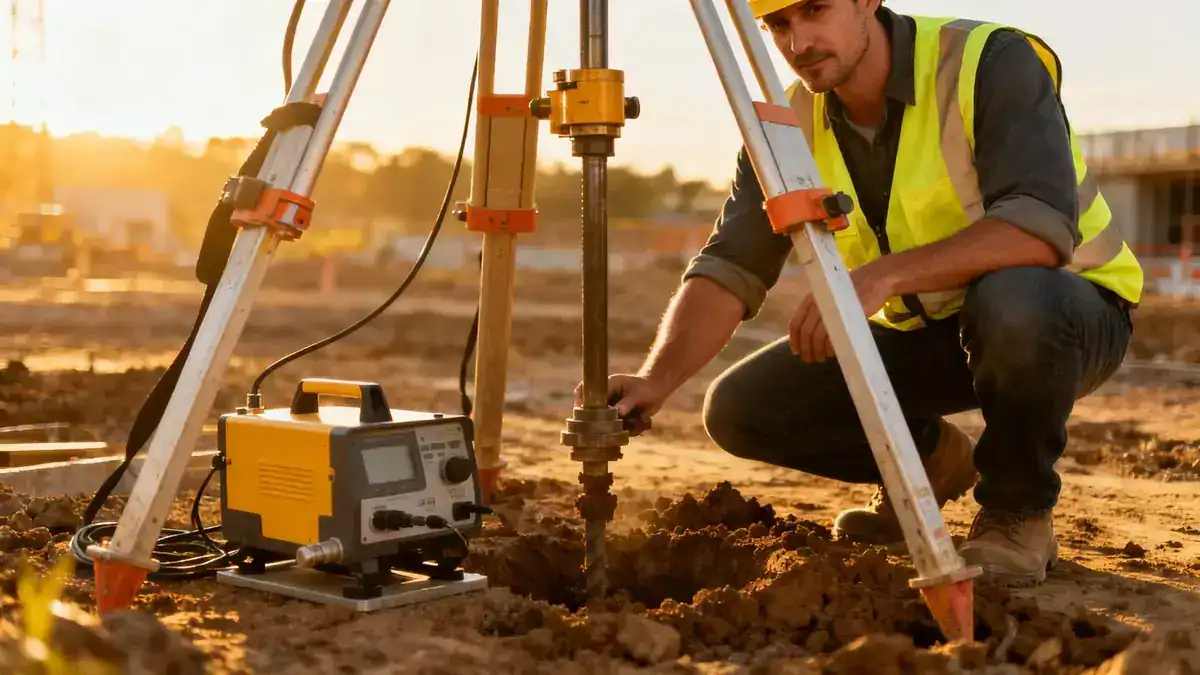
Methodology
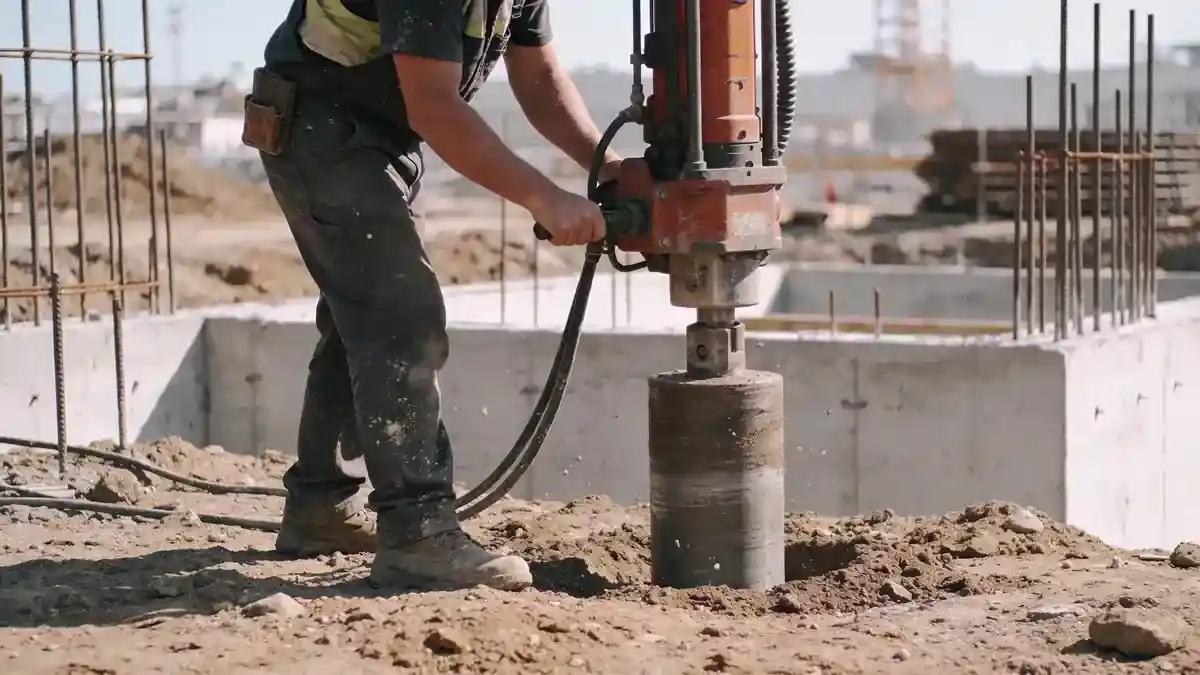
Our methodology in Toronto begins with a thorough review of existing geological maps and records, followed by a site-specific field investigation program. We employ spt boring to recover disturbed and undisturbed samples, complemented by in-situ testing to characterize soil strength and stiffness. Samples are analyzed in our soil mechanics laboratory for index properties, consolidation, and shear strength parameters. Field data is interpreted using local correlations and numerical modeling to develop design parameters. All work adheres to ASTM standards, including ASTM D1586 for SPT testing, ensuring consistency and reliability.
Reference Technical Parameters
| Parameter | Reference Value |
|---|---|
| Predominant soil type | Glacial till (silty clay to sandy silt) over shale bedrock |
| Maximum seismic acceleration (PGA) | 0.3g (based on NBCC 2020 Site Class D) |
| Typical groundwater level | 3–8 m below surface, varies seasonally |
| Bedrock depth | 10–30 m in most areas; shallower in north |
| Typical N60 range | 10–50 blows/ft (clay till to dense till) |
Local Considerations — Toronto
Toronto’s geological setting is dominated by Pleistocene glacial deposits overlying Ordovician shale. The city sits on the former Lake Iroquois plain, with deep sequences of glaciolacustrine clays and silts. These fine-grained soils often exhibit moderate to high plasticity and can be sensitive to disturbance. Groundwater levels are typically shallow, requiring careful dewatering assessments. Seismic hazard is moderate, with NBCC 2020 peak ground accelerations up to 0.3g for firm ground. Our team has extensive experience with deep foundations and earth retention systems in the downtown core, where fill and organic deposits complicate construction. For slope stability analyses in ravines, we rely on detailed shear strength testing and limit equilibrium methods.
Request a Quote
Our team reviews your project and issues an initial report at no cost.
Or write us directly at [email protected]
Services in Toronto
Locations covered in Toronto
Applicable Standards
- ASTM D1586 (Standard Test Method for Standard Penetration Test)
- NBCC 2020 (National Building Code of Canada)
- Ontario Building Code (OBC 2012)
- ASTM D2487 (Classification of Soils for Engineering Purposes)
- CSA A23.3 (Design of Concrete Structures)
Frequently Asked Questions
What are the typical soil conditions in Toronto?
Toronto’s soils primarily consist of glacial till, glaciolacustrine clays, and silts. The till is dense and provides good bearing capacity, while clay deposits can be soft to stiff. Bedrock (shale) is generally deep (10–30 m), but shallows in northern areas. Groundwater levels are typically 3–8 m below grade.
Is seismic design required for buildings in Toronto?
Yes, the National Building Code of Canada (NBCC 2020) classifies Toronto as a moderate seismic zone. Peak ground acceleration (PGA) for Site Class D is 0.3g. All new buildings must consider seismic loads per NBCC 2020 and the Ontario Building Code.
Are geotechnical investigations mandatory for construction in Toronto?
While not explicitly required for all small projects, the Ontario Building Code mandates geotechnical reports for foundations on fill, slopes, or where subsurface conditions are uncertain. Most municipalities require a site-specific investigation for permit approval on larger structures.