
Methodology
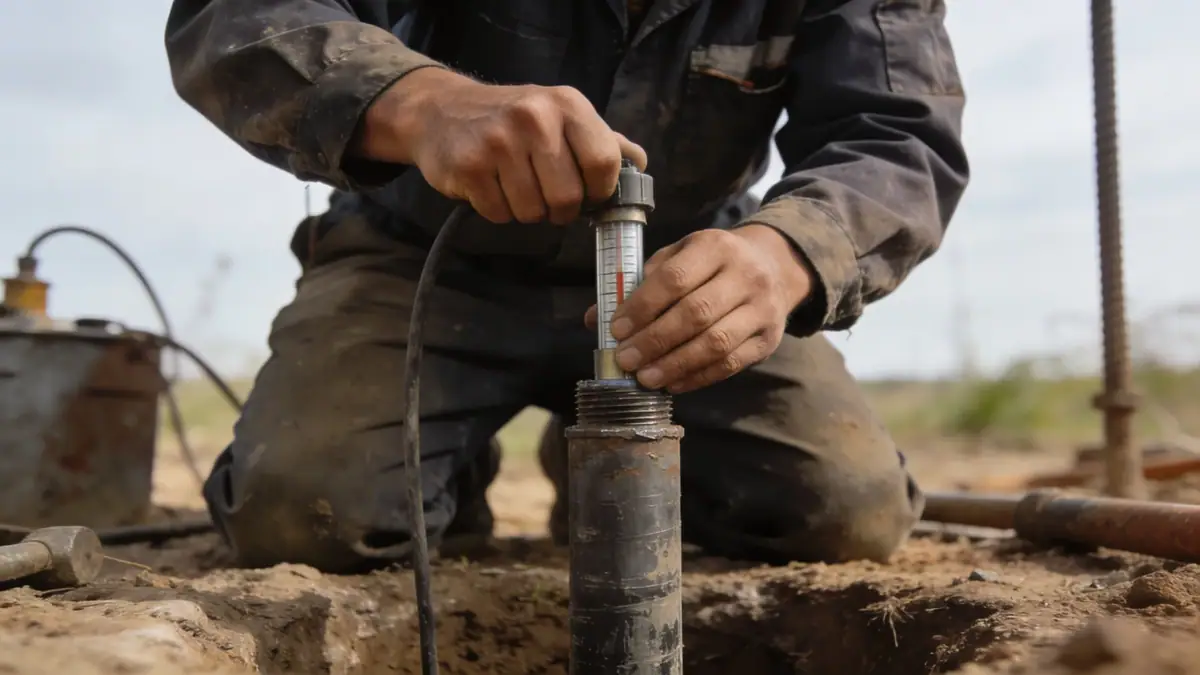
Our methodology for projects in North Bay Ontario begins with a comprehensive review of local geological maps and existing borehole records. We then execute a field investigation program that typically includes spt boring to assess soil stratification and strength, along with groundwater monitoring. Laboratory testing on recovered samples—such as grain size analysis and Atterberg limits—provides essential parameters for settlement and bearing capacity calculations. All work adheres to recognized standards, including ASTM D1586 for standard penetration testing.
Reference Technical Parameters
| Parameter | Reference Value |
|---|---|
| Predominant soil type | Glacial till / silty sand with gravel |
| Maximum seismic acceleration (PGA) | 0.15–0.20 g (NBCC 2020) |
| Typical groundwater level | 1–3 m below ground surface |
| Bedrock depth | 1–5 m (downtown) to >20 m (valley fills) |
| Typical N60 range | 10–30 blows/0.3 m (till) |
Local Considerations — North Bay Ontario
North Bay Ontario lies within the Canadian Shield, where bedrock (typically granitic gneiss) is often encountered at depths of 1 to 5 meters in the downtown area, but can exceed 20 meters in glacial till-filled valleys. The water table is generally shallow (1–3 m) near Lake Nipissing, requiring careful dewatering planning. Seismic hazard is moderate, with PGA values of 0.15–0.20 g per NBCC 2020. Our experience includes projects ranging from lakeside residential developments to commercial structures in the city core. For broader regional context, our geotechnical engineering en Toronto team collaborates on complex assignments. We also offer soil mechanics laboratory services for detailed material characterization.
Request a Quote
Our team reviews your project and issues an initial report at no cost.
Or write us directly at [email protected]
Services in North Bay Ontario
Applicable Standards
- ASTM D1586 (Standard Penetration Test)
- NBCC 2020 (National Building Code of Canada)
- OBC (Ontario Building Code)
- ASTM D2487 (Unified Soil Classification System)
Frequently Asked Questions
What are the typical soil conditions for foundations in North Bay Ontario?
North Bay Ontario is underlain by glacial till and shallow bedrock of the Canadian Shield. Soil profiles vary from dense till to clayey silt in scattered deposits. Bedrock may be encountered at depths of 1–5 m in the city center, but deeper deposits exist in former glacial channels.
Is a geotechnical study mandatory for construction in North Bay Ontario?
Yes, the Ontario Building Code requires a geotechnical investigation for most building permits, especially for structures over 600 m² or with unusual loads. Our firm ensures compliance with OBC Part 4, providing soil bearing capacity, settlement analysis, and seismic design parameters.
How does the seismic hazard in North Bay Ontario affect foundation design?
North Bay Ontario falls in a moderate seismic zone with PGA of 0.15–0.20 g. Foundations must consider liquefaction potential in saturated sands and lateral earth pressures during earthquakes. Our designs incorporate NBCC 2020 requirements for site-specific response spectra.