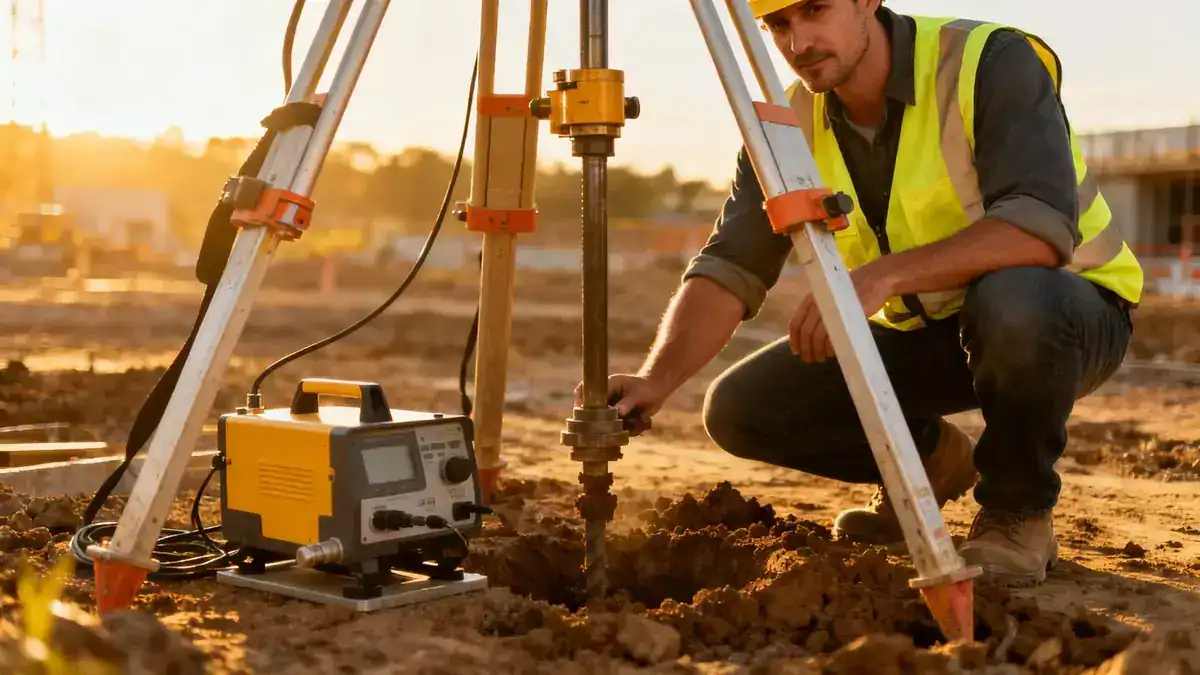
Methodology
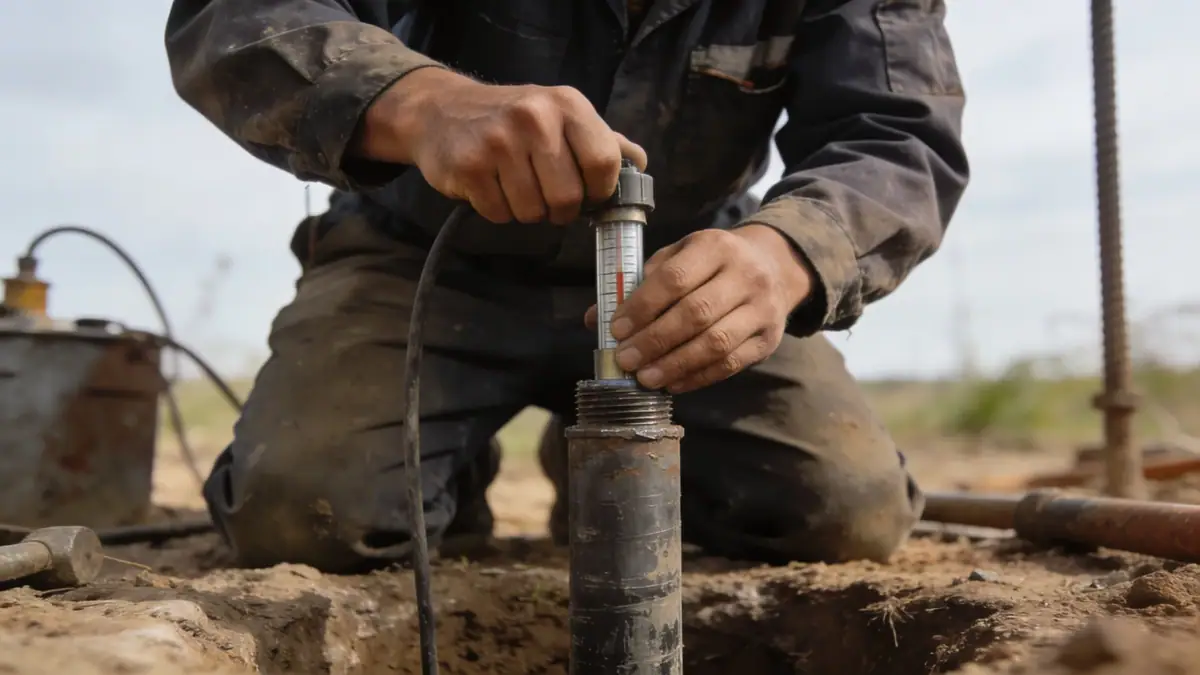
Our methodology in Ottawa begins with a thorough desk study of regional geology and existing borehole records, followed by field investigations tailored to site conditions. We employ standard penetration testing (SPT) per ASTM D1586 to assess soil strength and stratigraphy, with sampling intervals typically every 1.5 meters. For soft clays, we supplement with CPT soundings for continuous profiling. Samples are analyzed in our soil mechanics laboratory for index properties, consolidation, and shear strength, ensuring reliable parameters for foundation and slope design.
Reference Technical Parameters
| Parameter | Reference Value |
|---|---|
| Predominant soil type | Sensitive marine clay (Leda clay) and glacial till |
| Maximum seismic acceleration (PGA) | 0.2g to 0.4g (per NBCC 2020) |
| Typical groundwater level | 1.5 to 5 m below ground surface |
| Bedrock depth | 10 to 40 m in urban areas; shallower in west Ottawa |
| Typical N60 range | 2 to 10 in clay; 15 to 40 in till |
Local Considerations — Ottawa
Ottawa's subsurface is dominated by Leda clay, a sensitive marine deposit prone to strength loss upon disturbance. Seismic hazard is moderate per NBCC 2020, with peak ground accelerations up to 0.4g, requiring careful site-specific response analysis. Groundwater levels are shallow near the Ottawa River, impacting excavation and foundation design. Downtown and Sandy Hill feature deeper bedrock, while suburban areas like Barrhaven have deep soft clays. Common geotechnical challenges include slope stability along riverbanks and differential settlement in clay fills, addressed through slope stability and settlement analyses.
Request a Quote
Our team reviews your project and issues an initial report at no cost.
Or write us directly at [email protected]
Services in Ottawa
Locations covered in Ottawa
Applicable Standards
- ASTM D1586
- NBCC 2020
- Ontario Building Code (OBC) 2012
- CSA A23.3
- ASTM D2487
Frequently Asked Questions
What types of soil are commonly found in Ottawa?
Ottawa is underlain by Leda clay (sensitive marine clay), glacial till, and occasional sand/gravel deposits. The clay is highly compressible and sensitive, requiring careful geotechnical evaluation to avoid bearing capacity failures or excessive settlement.
Is seismic design required in Ottawa?
Yes, per the National Building Code of Canada (NBCC 2020), Ottawa is in a moderate seismic zone with PGA values of 0.2g to 0.4g. Geotechnical investigations must include site classification and liquefaction assessment for critical structures.
Are geotechnical studies mandatory for construction in Ottawa?
For most building permits, the Ontario Building Code requires a geotechnical report when subsurface conditions may affect foundation design. This is especially critical for structures on Leda clay or near slopes.