Methodology
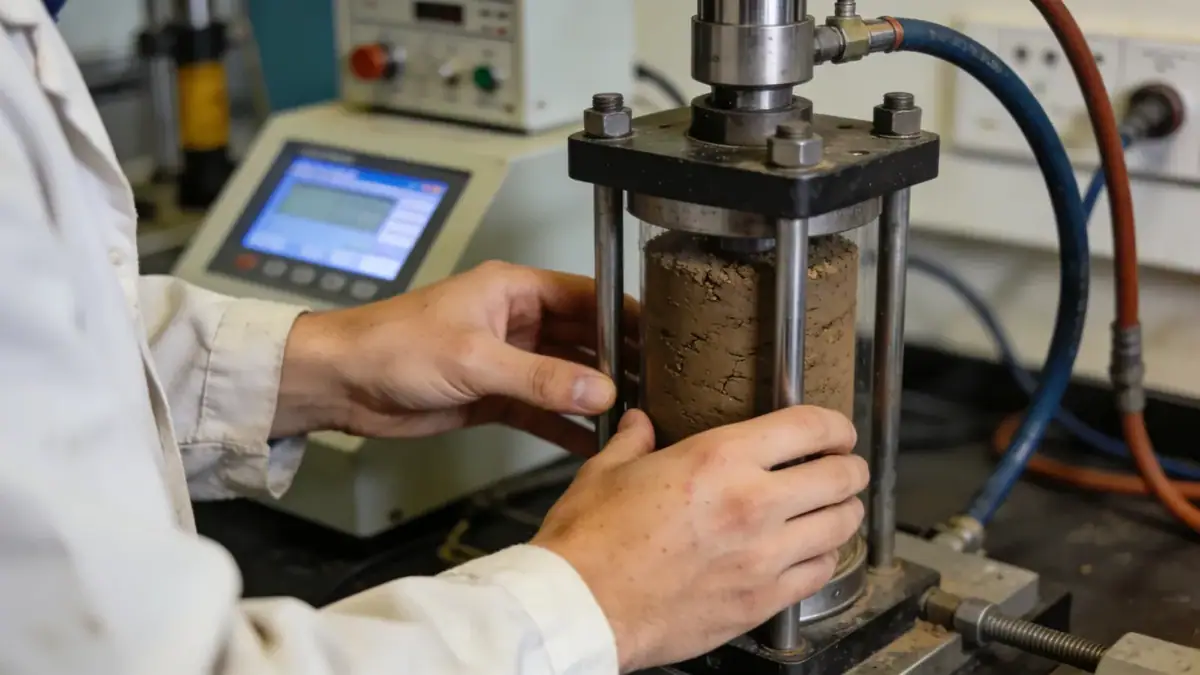
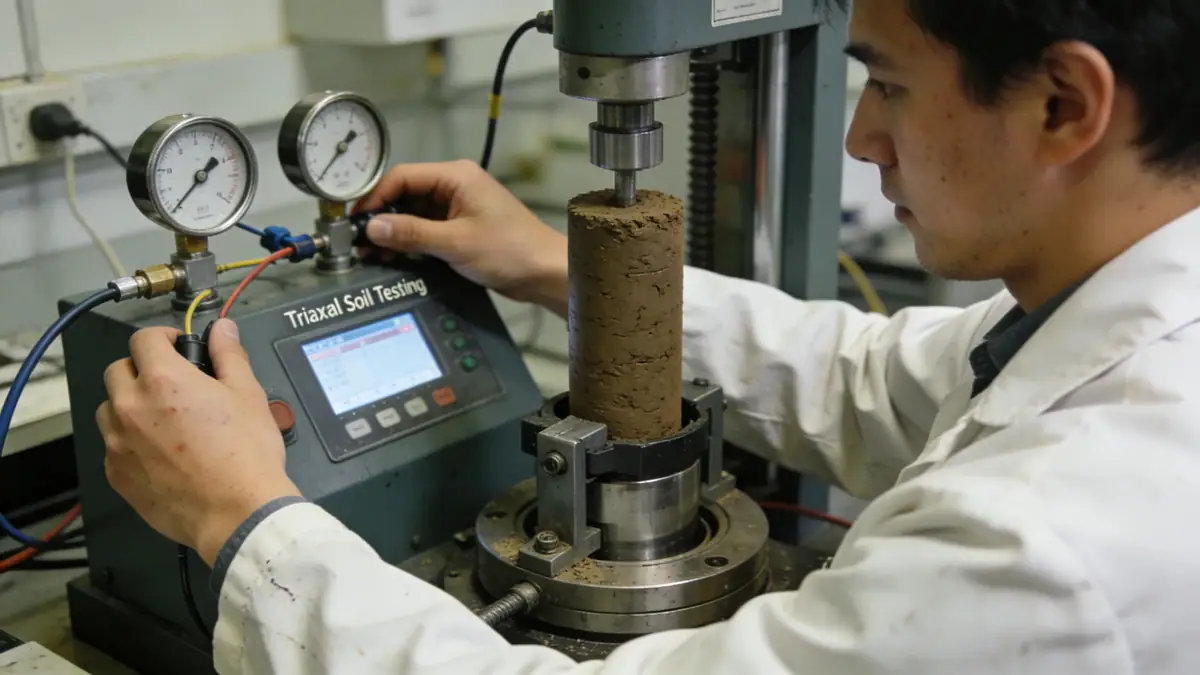
Our soil mechanics laboratory follows ASTM D1586 for standard penetration test sample retrieval and classification. We perform grain size analysis, Atterberg limits, compaction tests (Standard and Modified Proctor), and direct shear testing. For strength parameters, unconfined compression tests are conducted on undisturbed samples at a rate of 0.5% strain per minute. Consolidation tests determine preconsolidation pressure and compression index using incremental loading up to 3200 kPa. All procedures adhere to Canadian Foundation Engineering Manual guidelines. Our technicians log soil types, moisture content, and unit weight. Results are cross-referenced with field observations from our SPT Boring services to validate subsurface profiles.
Reference Technical Parameters
| Parameter | Reference Value |
|---|---|
| Grain Size Distribution | Sieve and hydrometer analysis (0.002–75 mm) |
| Atterberg Limits | Liquid limit 20–80%; Plastic limit 10–40% |
| Standard Proctor Compaction | Maximum dry density 1.6–2.2 t/m³; OMC 8–20% |
| Direct Shear Strength | Peak friction angle 25°–45°; cohesion 0–50 kPa |
| Consolidation (1D) | Preconsolidation pressure 50–600 kPa; Cc 0.1–0.4 |
Local Considerations — Canada
Canada's diverse geology demands region-specific laboratory testing. In British Columbia, soils are often glacially overconsolidated with high gravel content, requiring large-scale direct shear tests. In the Prairie provinces, expansive clays necessitate swelling pressure tests. Our firm adapts protocols for each region: for example, in Abbotsford, we prioritize cyclic triaxial testing for seismic zones; in Airdrie, we focus on sulfate resistance for basement soils; and in Ajax, we emphasize consolidation testing for compressible lacustrine clays. This tailored approach ensures that our Ajax clients receive accurate design parameters.
Request a Quote
Our team reviews your project and issues an initial report at no cost.
Or write us directly at [email protected]
Applicable Standards
- ASTM D1586-18 Standard Test Method for Standard Penetration Test
- ASTM D2487-17 Standard Practice for Classification of Soils for Engineering Purposes
- Canadian Foundation Engineering Manual (CFEM) 5th Edition
- CSA A23.1-19 Concrete Materials and Methods of Concrete Construction (for soil-cement testing)
Frequently Asked Questions
What is the typical turnaround time for soil mechanics laboratory tests?
Standard tests such as grain size and Atterberg limits are completed within 5–7 business days. Advanced tests like consolidation or direct shear may require 10–14 business days, depending on the number of load increments. Urgent projects can be expedited with prior coordination.
How do you ensure sample integrity during transport from field to laboratory?
Samples are sealed in moisture-proof containers and transported in temperature-controlled vehicles. Disturbed samples are bagged and labeled; undisturbed samples are placed in thin-walled tubes or Shelby tubes, cushioned with foam. Chain-of-custody forms accompany each batch.
Which ASTM standards do you follow for soil classification?
We use ASTM D2487 for unified soil classification (USCS) and ASTM D2488 for visual-manual identification. For fine-grained soils, Atterberg limits per ASTM D4318 are integrated. Grain size follows ASTM D6913 for sieves and ASTM D7928 for hydrometer analysis.
How much does soil mechanics laboratory testing cost in Canada?
Costs range from $4,290 to $7,150 depending on depth, accessibility, and number of tests. A basic suite (grain size, Atterberg, compaction) is at the lower end; advanced tests like triaxial or consolidation increase the fee. We recommend requesting a project-specific quote.