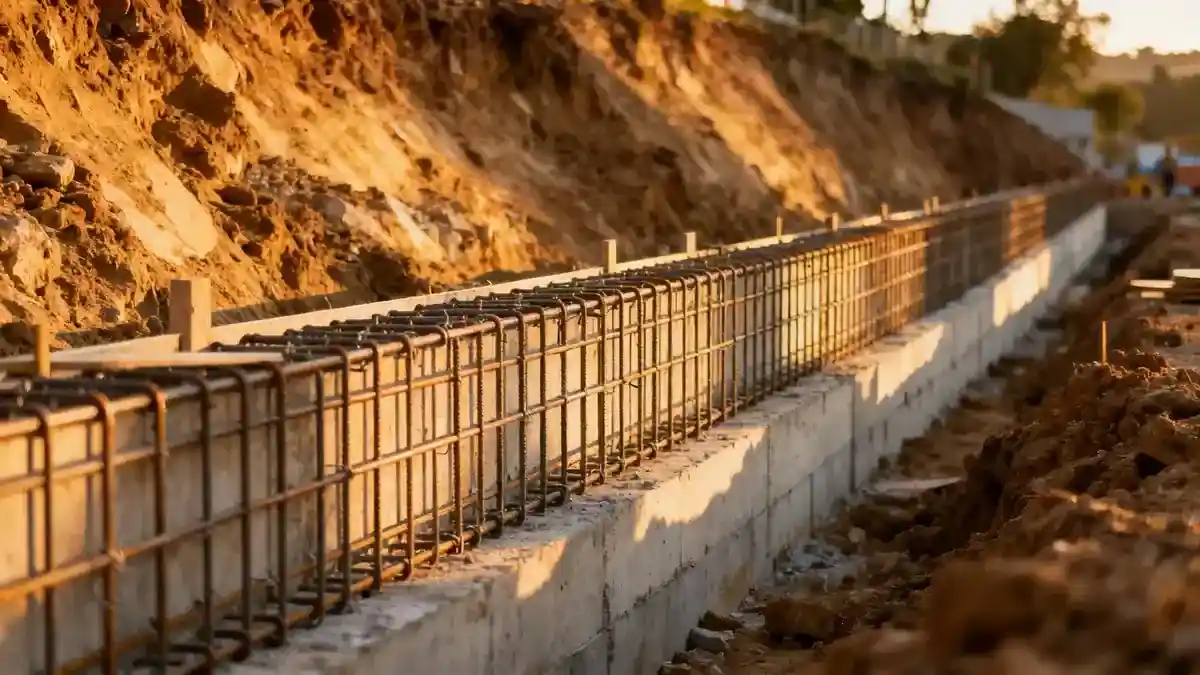
Methodology
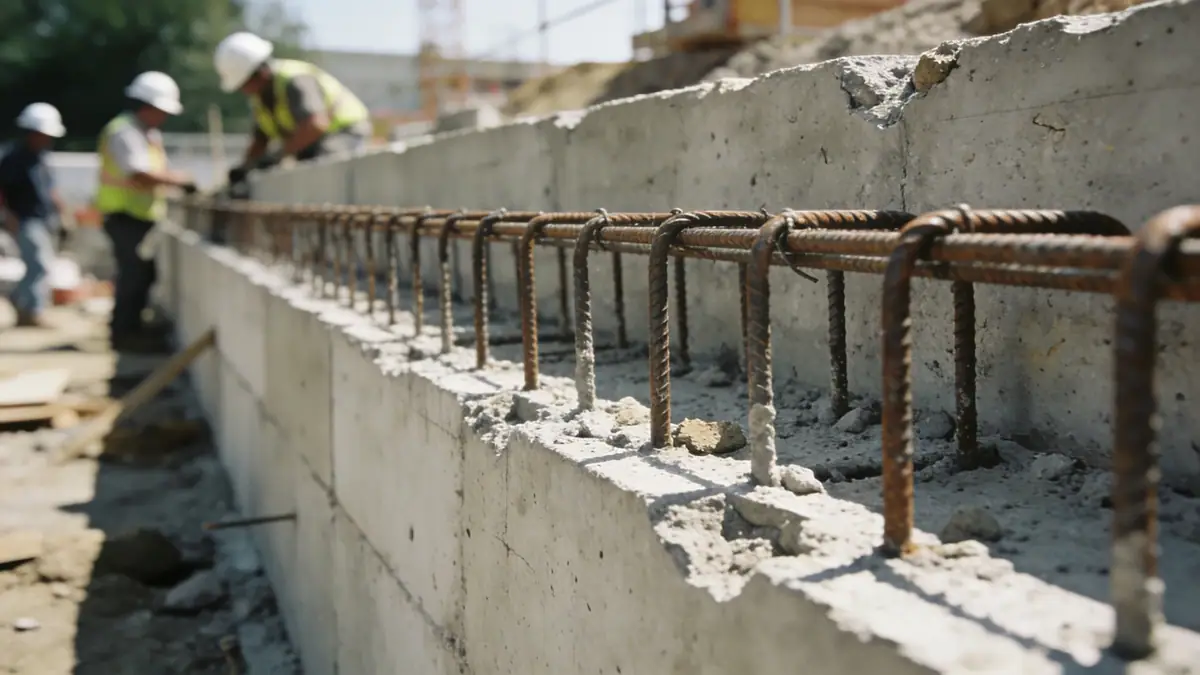
Our retaining wall design methodology follows a systematic process aligned with NBCC 2020 and CSA standards. We begin with a subsurface investigation using Standard Penetration Testing (ASTM D1586) and soil sampling to depths of at least 1.5 times the wall height. Laboratory tests determine soil shear strength parameters (cohesion and friction angle), unit weight, and permeability. We then perform lateral earth pressure calculations using Rankine or Coulomb theories, considering active, passive, and at-rest conditions. Seismic loads are evaluated per NBCC 2020 seismic hazard maps. Drainage design includes weep holes and granular backfill to reduce hydrostatic pressure. Our team uses software such as GeoStudio and RSPile for slope stability and foundation analysis. The final design includes reinforcement detailing for concrete, masonry, or segmental retaining walls, ensuring compliance with all applicable codes and safety factors.
Reference Technical Parameters
| Parameter | Reference Value |
|---|---|
| Wall Height | 1.5 m to 12 m |
| Design Life | 50 years (typical) |
| Factor of Safety (Sliding) | ≥ 1.5 |
| Factor of Safety (Overturning) | ≥ 2.0 |
| Maximum Lateral Deflection | H/100 or 25 mm, whichever less |
Local Considerations — Canada
Canada's diverse geology requires region-specific retaining wall designs. In British Columbia (e.g., Abbotsford, Vancouver), high seismic activity and glacial till soils demand reinforced designs with seismic tiebacks. In the Prairie provinces (e.g., Calgary, Edmonton), expansive clay soils necessitate drainage layers and flexible wall systems. In Ontario (e.g., Toronto, Ottawa), shale and limestone bedrock provide good bearing capacity but require controlled blasting or excavation. Our team adapts designs per local soil conditions, groundwater levels, and frost depth (up to 2.4 m in northern areas). We also consider municipal bylaws and environmental constraints for each city.
Request a Quote
Our team reviews your project and issues an initial report at no cost.
Or write us directly at [email protected]
Applicable Standards
- National Building Code of Canada (NBCC 2020) – Section 4.6
- ASTM D1586 – Standard Test Method for Standard Penetration Test (SPT)
- CSA A23.3 – Design of Concrete Structures
- ASTM D2488 – Description and Identification of Soils
Frequently Asked Questions
What geotechnical information is needed for retaining wall design?
We require soil borings to depths of at least 1.5 times the wall height, laboratory tests for shear strength and consolidation, groundwater level data, and seismic site classification per NBCC 2020. This information determines lateral earth pressures, bearing capacity, and drainage requirements.
How long does a retaining wall design project take?
Typical timelines range from 2 to 6 weeks, depending on site complexity, number of borings, and laboratory testing. Our team coordinates with drilling contractors and labs to expedite the process without compromising quality.
What types of retaining walls does your firm design?
We design gravity walls, cantilever walls, anchored walls, segmental retaining walls (SRWs), and mechanically stabilized earth (MSE) walls. Our designs comply with NBCC 2020 and use materials such as reinforced concrete, masonry, steel, and geosynthetics.
How much does retaining wall design cost in Canada?
Costs vary based on wall height, site accessibility, and required testing. Typical fees range from $1,430 to $5,720 for a complete geotechnical investigation and design package. For an accurate estimate, please contact our team with project details.