Methodology
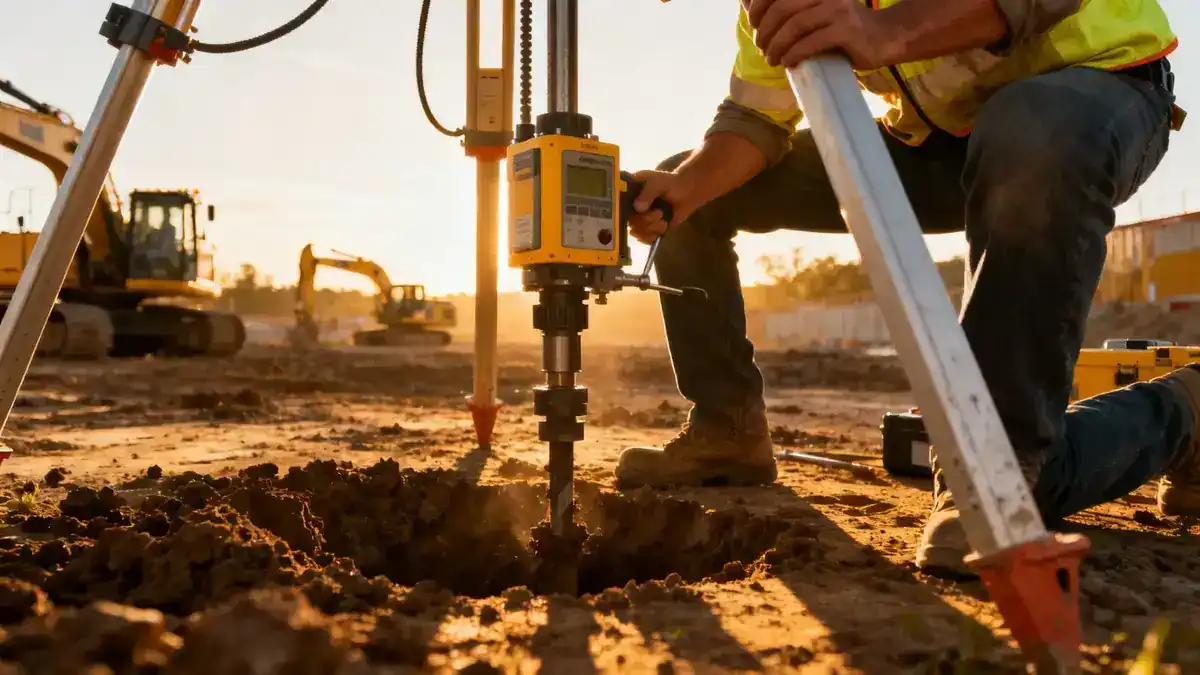
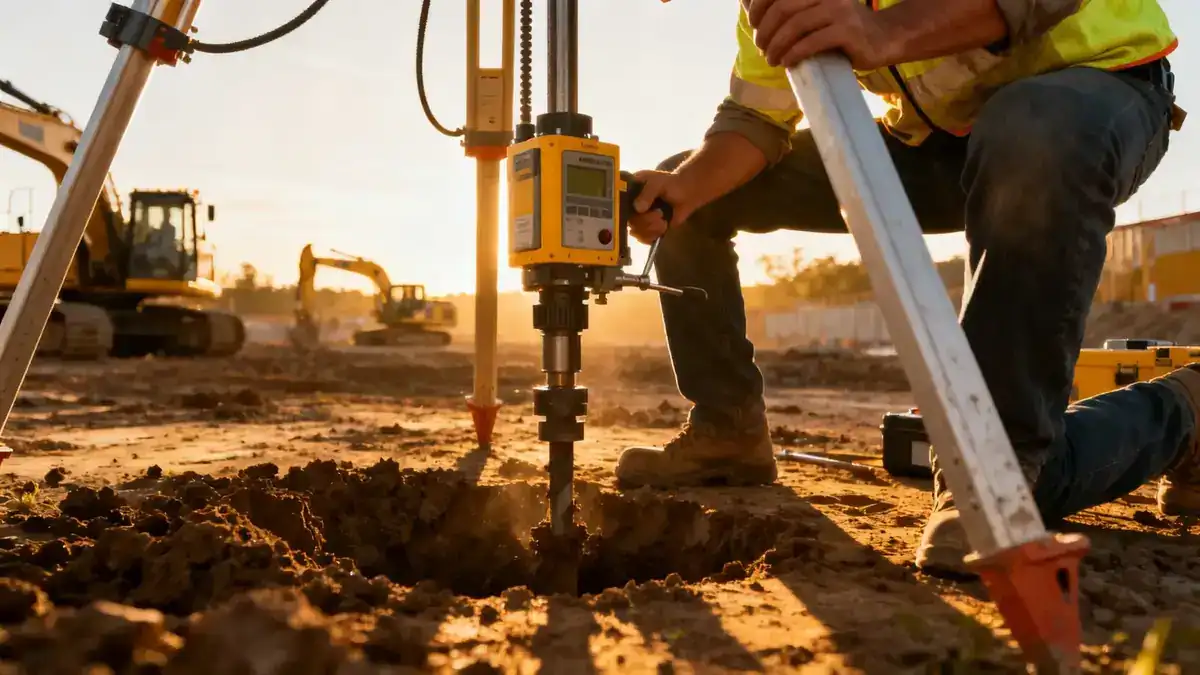
Our geotechnical approach in Montreal begins with a comprehensive desk study of existing geological maps and borehole records from the region. We then conduct field investigations, including spt boring to characterize soil stratigraphy and obtain samples for laboratory testing. The fieldwork is complemented by in-situ testing such as piezocone penetration tests (CPTu) and geophysical surveys to assess groundwater conditions and bedrock depth. Our laboratory team performs advanced tests, including consolidation and triaxial tests on undisturbed samples, to determine strength and deformation parameters. All data is integrated into a numerical model to evaluate bearing capacity, settlement, and slope stability, ensuring our recommendations are tailored to the site-specific conditions of Montreal.
Reference Technical Parameters
| Parameter | Reference Value |
|---|---|
| Predominant Soil Type | Marine clay (Leda clay) and glacial till |
| Maximum Seismic Acceleration (PGA) | 0.2g to 0.4g (Site Class D) |
| Typical Groundwater Level | 1.5 to 4.0 m below ground surface |
| Bedrock Depth | 5 to 30 m (varies; shallow in west, deep in east) |
| Typical N60 Range | 2 to 10 blows/0.3m in clay; 15 to 40 in till |
Local Considerations — Montreal
Montreal's geology is dominated by the Champlain Sea clay, a sensitive marine deposit prone to large settlements and lateral spreading. The city's seismic hazard, classified under the National Building Code of Canada, requires site-specific spectral analysis for structures in seismic site classes D or E. Groundwater levels are shallow in low-lying areas, demanding careful dewatering and temporary support systems. In contrast, the western sector (e.g., Westmount) features glacial tills and shallow bedrock, favoring shallow foundations. A typical challenge is the presence of granular pockets within the clay matrix, requiring detailed investigation via soil mechanics laboratory testing to assess liquefaction potential. Our team integrates these local factors to provide robust geotechnical solutions.
Request a Quote
Our team reviews your project and issues an initial report at no cost.
Or write us directly at [email protected]
Services in Montreal
Locations covered in Montreal
Applicable Standards
- ASTM D1586 (Standard Test Method for Standard Penetration Test)
- ASTM D2487 (Unified Soil Classification System)
- National Building Code of Canada (NBCC) 2020
- CSA A23.3 (Design of Concrete Structures)
- Quebec Construction Code (Chapter I, Building)
Frequently Asked Questions
What are the typical soil conditions encountered in Montreal?
Montreal's subsurface is predominantly characterized by marine clay (Leda clay) deposited by the Champlain Sea, underlain by glacial till and bedrock. The clay is highly sensitive and can exhibit significant settlement under load. Sand and gravel lenses are common, affecting drainage and bearing capacity.
How do seismic provisions affect geotechnical design in Montreal?
Montreal is in a moderate seismic zone (NBCC 2020). Site-specific seismic hazard analysis is required for important structures. The presence of soft clay amplifies ground motions, necessitating liquefaction assessment and foundation design to accommodate potential lateral spreading and cyclic softening.
Are geotechnical investigations mandatory for residential projects in Montreal?
For single-family homes, geotechnical studies are not always mandatory unless specified by the municipality or if the site has known issues (e.g., soft clay, steep slopes). However, for multi-story buildings or any project requiring a foundation permit, a geotechnical report is typically required by the building code.