
Methodology
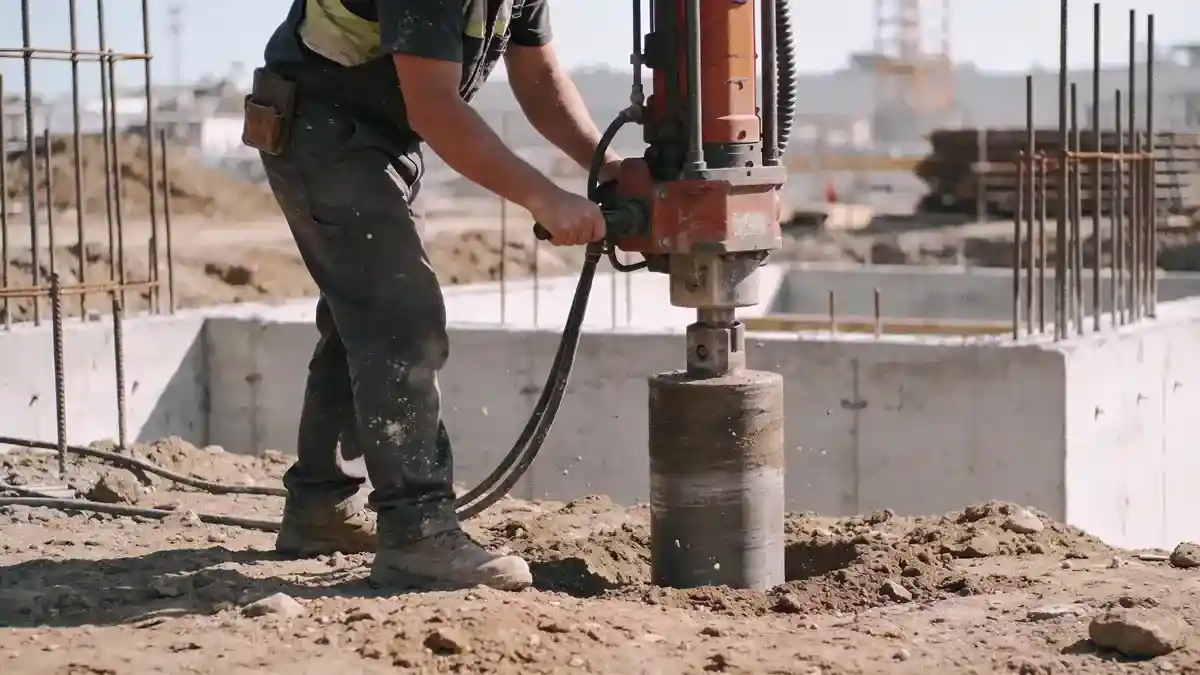
Our methodology for geotechnical engineering in Repentigny begins with a thorough review of available geological maps and historical borehole data. Field investigations typically include spt boring to assess soil stratigraphy and strength, as well as piezometer installation for groundwater monitoring. Sampling follows ASTM D1586 for split-spoon samples. Laboratory testing on recovered samples includes Atterberg limits, grain size distribution, and unconfined compression tests. We integrate these results with site-specific seismic hazard analysis per NBCC 2020 to develop design parameters for foundations, slopes, and retaining structures. Our approach ensures that all recommendations are tailored to Repentigny's clay-dominated subsurface conditions.
Reference Technical Parameters
| Parameter | Reference Value |
|---|---|
| Predominant soil type | Marine clay (Champlain Sea clay) |
| Typical groundwater depth | 1.5–3.0 m below ground surface |
| Peak ground acceleration (PGA) | 0.20g (NBCC 2020) |
| Bedrock depth | 10–30 m (variable) |
| Typical N60 range (clay) | 0–4 blows/300 mm |
Local Considerations — Repentigny
Repentigny's subsurface is dominated by post-glacial Champlain Sea clay, a sensitive material prone to significant settlement under load and potential for lateral spreading. Groundwater levels are typically shallow (1.5–3 m), complicating excavation and foundation design. The region falls in NBCC 2020 seismic zone with PGA up to 0.20g, requiring site-specific response analysis for structures. Urban areas near the Saint Lawrence River may encounter coarser fluvial deposits, while inland zones remain clay-dominant. Typical projects include residential subdivisions requiring preloading or pile foundations, and municipal infrastructure where slope stability is critical. For broader regional context, refer to geotechnical engineering en Montreal.
Request a Quote
Our team reviews your project and issues an initial report at no cost.
Or write us directly at [email protected]
Services in Repentigny
Applicable Standards
- ASTM D1586 (Standard Test Method for Penetration Test and Split-Barrel Sampling of Soils)
- NBCC 2020 (National Building Code of Canada)
- CSA A23.3 (Design of Concrete Structures)
- Quebec Construction Code (Chapter I, Building)
Frequently Asked Questions
What are the typical soil conditions in Repentigny?
Repentigny is underlain by Champlain Sea clay, a soft to firm, high-plasticity marine clay. This soil is sensitive and can lose strength when disturbed. Groundwater is generally shallow, and bedrock is deep (10–30 m). These conditions require careful foundation design to mitigate settlement.
Is a geotechnical study mandatory for construction in Repentigny?
Yes, for most buildings and structures, the Quebec Construction Code and NBCC require a geotechnical investigation to determine soil bearing capacity, settlement potential, and seismic site classification. Local municipalities may also require studies for subdivisions and infrastructure projects.
How does seismic risk affect geotechnical design in Repentigny?
Repentigny has a PGA of 0.20g per NBCC 2020, indicating moderate seismic hazard. The soft clay amplifies ground motions, necessitating site-specific seismic response analysis. Design must account for liquefaction potential in sandy layers and cyclic softening in sensitive clays.