Methodology
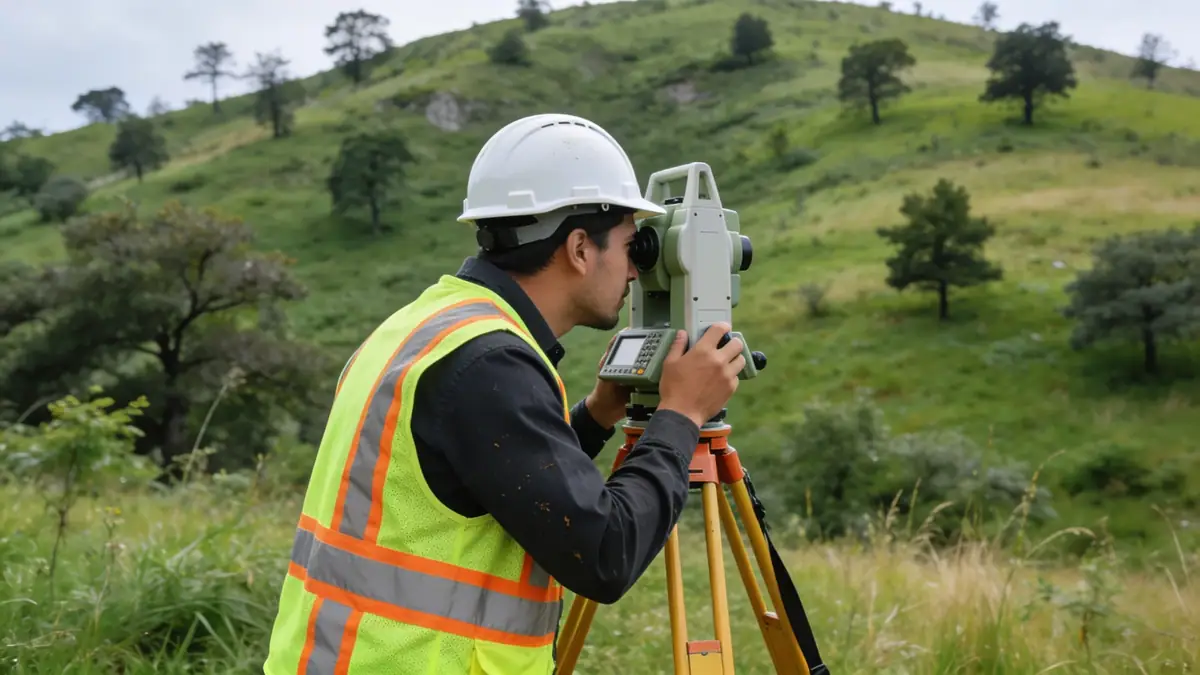
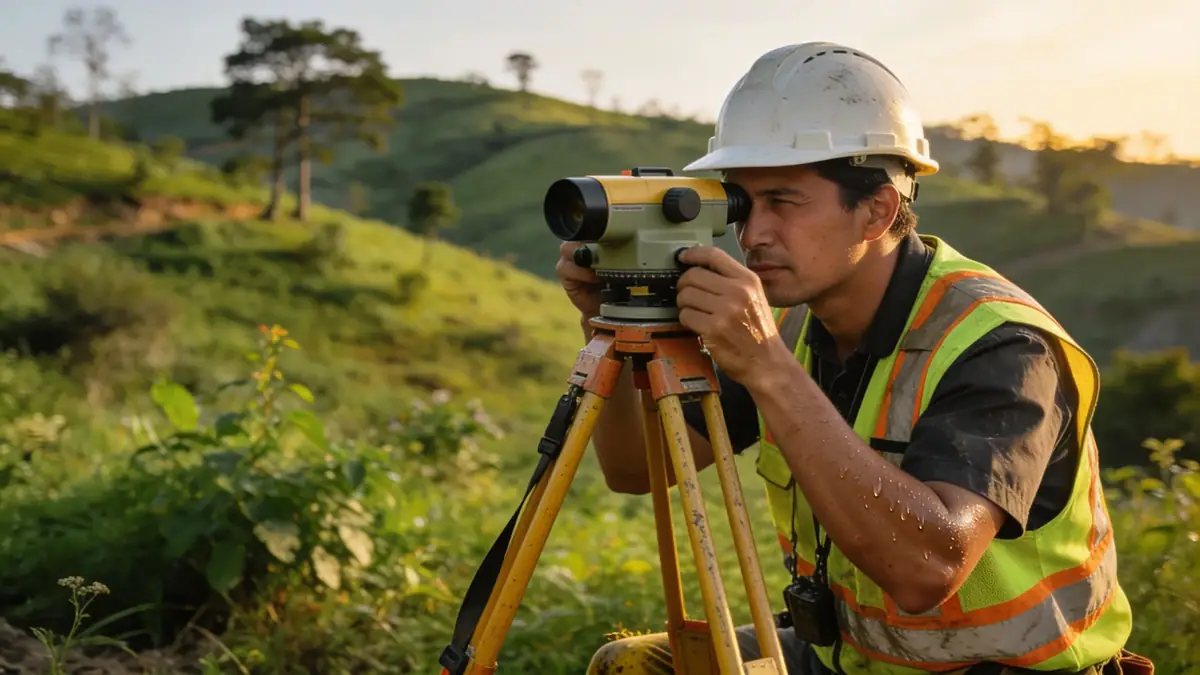
Our methodology follows the rigorous procedures outlined in ASTM D1586 for Standard Penetration Test (SPT) and ASTM D3080 for direct shear testing. For slope stability, we employ limit equilibrium methods (e.g., Bishop, Janbu, Spencer) and finite element analysis using software like SLOPE/W. Field investigations include borehole drilling to depths of 30 m, installation of piezometers for pore pressure monitoring, and sampling for laboratory testing. In seismic zones, we apply pseudo-static analysis with horizontal seismic coefficients up to 0.3g per NBCC 2020. Our SPT Boring services provide critical strength parameters, while Soil Mechanics Laboratory tests determine cohesion and friction angles. Each analysis includes a factor of safety assessment, typically targeting 1.5 for static and 1.1 for seismic conditions.
Reference Technical Parameters
| Parameter | Reference Value |
|---|---|
| Factor of Safety (Static) | 1.5 (minimum) |
| Factor of Safety (Seismic) | 1.1 (minimum) |
| Shear Strength Parameters | c' = 0–50 kPa, φ' = 25°–45° |
| Borehole Depth | 5–30 m |
| Pore Pressure Monitoring | Vibrating wire piezometers, 6-month duration |
Local Considerations — Canada
Canada’s diverse geology—from the soft marine clays of the St. Lawrence Lowlands to the glacially overconsolidated tills of the Prairies—requires tailored slope stability approaches. In coastal cities like Vancouver and Abbotsford, heavy rainfall and seismic activity drive deep-seated failures, necessitating coupled hydro-mechanical modeling. In contrast, regions like Calgary and Edmonton rely on cut-slope stability for river valleys, where groundwater control is paramount. Our firm adapts methodologies per region: for example, in Abbotsford, we incorporate unsaturated soil mechanics to account for seasonal moisture changes. In Barrie, we address shallow failures in granular soils using limit equilibrium. This localized expertise ensures reliable results across all provinces.
Request a Quote
Our team reviews your project and issues an initial report at no cost.
Or write us directly at [email protected]
Applicable Standards
- Canadian Foundation Engineering Manual (CFEM) 5th Edition
- National Building Code of Canada (NBCC) 2020 – Seismic Provisions
- ASTM D1586 – Standard Test Method for Standard Penetration Test (SPT)
- ASTM D3080 – Direct Shear Test of Soils Under Consolidated Drained Conditions
Frequently Asked Questions
What is the typical factor of safety required for slope stability in Canada?
For permanent slopes under static conditions, a minimum factor of safety of 1.5 is standard per CFEM. For seismic or transient loading, 1.1 is acceptable. Temporary construction slopes may use 1.3. Our analyses consider the consequences of failure and site-specific risks.
How is seismic loading incorporated into slope stability analysis?
Seismic loading is applied as a pseudo-static horizontal acceleration using the peak ground acceleration (PGA) from NBCC 2020. For critical projects, we perform Newmark sliding block analyses to estimate permanent displacements. The seismic coefficient typically ranges from 0.05g to 0.3g depending on location.
What field and laboratory tests are essential for slope stability?
Essential field tests include SPT (ASTM D1586) for strength, piezometer installation for pore pressure, and sampling for lab testing. Laboratory tests include direct shear (ASTM D3080) and triaxial compression for cohesion and friction angle. For sensitive clays, field vane shear tests are also performed.
How much does slope stability analysis cost in Canada?
Costs for a typical slope stability study range from $1,720 to $5,720, depending on site complexity, depth of investigation, number of boreholes, and laboratory tests. Remote or difficult-access sites may incur higher mobilization fees. We recommend requesting a detailed quote for your specific project.