
Methodology
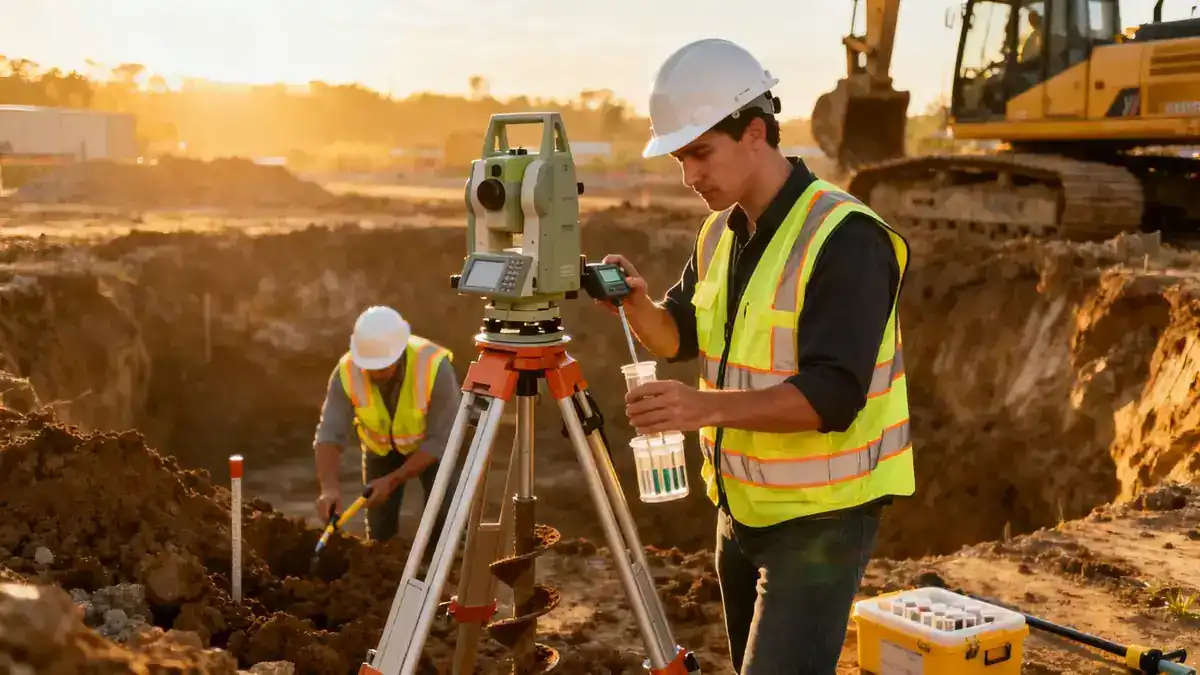
Our methodology for geotechnical engineering in Vancouver begins with a comprehensive desk study of existing geological maps, borehole records, and seismic hazard data for the site. We then conduct field investigations, including spt boring in accordance with ASTM D1586, to characterize subsurface conditions. Advanced laboratory testing on recovered samples follows, focusing on parameters such as grain-size distribution, Atterberg limits, and shear strength. For slope stability assessments, we perform limit equilibrium analyses calibrated against local case histories. Our approach integrates these results with building code requirements, such as the 2020 British Columbia Building Code, to design foundations and earthworks that mitigate risks specific to Vancouver’s seismically active environment. This systematic process ensures robust, defensible recommendations for our clients.
Reference Technical Parameters
| Parameter | Reference Value |
|---|---|
| Predominant soil type | Glacial till, sand, silt, and organic deposits |
| Maximum seismic acceleration (PGA) | 0.2g to 0.4g (depending on site class) |
| Typical groundwater level | 1.5 m to 5.0 m below ground surface |
| Bedrock depth | 0 m (exposed) to >100 m in delta areas |
| Typical N60 range | 10 to 50 blows/0.3 m (variable with soil type) |
Local Considerations — Vancouver
Vancouver’s geology is dominated by glacial deposits from the Fraser Glaciation, with till and outwash sands overlying bedrock in upland areas, while the Fraser River delta consists of thick sequences of soft silts and clays. Groundwater levels are shallow in low-lying regions, often within 1.5 m of the surface, requiring dewatering considerations for excavations. Seismic hazards are significant, with peak ground accelerations reaching 0.4g for Site Class C, necessitating liquefaction assessments in deltaic soils. The contrast between the competent till of the West Side and the compressible deltaic soils of Richmond demands tailored foundation strategies. Our team addresses these local conditions through targeted soil mechanics laboratory testing and site-specific seismic response analyses.
Request a Quote
Our team reviews your project and issues an initial report at no cost.
Or write us directly at [email protected]
Services in Vancouver
Locations covered in Vancouver
Applicable Standards
- ASTM D1586 (Standard Test Method for SPT)
- 2020 British Columbia Building Code (Division B, Part 4)
- National Building Code of Canada 2020 (seismic provisions)
- BC Ministry of Transportation & Infrastructure standards
Frequently Asked Questions
What are the typical soil conditions encountered in Vancouver?
Vancouver’s soils vary widely: glacial till and dense sands dominate upland areas, while the Fraser River delta features soft silts, clays, and peat. Organic deposits are common in low-lying zones. These conditions influence foundation design and require site-specific investigations.
How does seismic activity affect geotechnical design in Vancouver?
Vancouver lies in a high-seismicity region due to the Cascadia subduction zone. The BC Building Code requires site-specific seismic hazard assessments, including liquefaction potential for loose saturated sands. Our analyses incorporate peak ground accelerations up to 0.4g to ensure structural safety.
Are geotechnical studies mandatory for construction in Vancouver?
Yes, the Vancouver Building By-law and BC Building Code mandate geotechnical investigations for most building permits, especially for structures in seismic zones or on soft soils. A qualified professional must submit a report detailing subsurface conditions and foundation recommendations.