Methodology

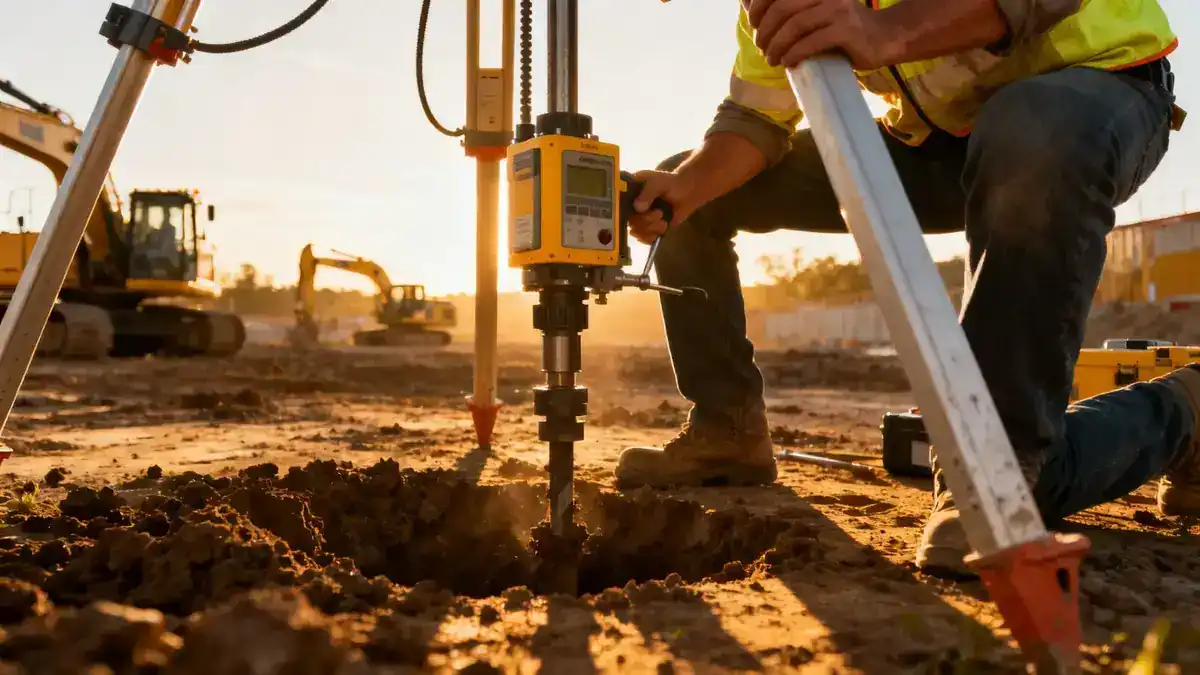
Our methodology in New Westminster follows established protocols such as ASTM D1586 for Standard Penetration Test (SPT) boring, which provides continuous soil sampling and N-value measurements. We integrate these results with laboratory testing, including grain size analysis per ASTM D6913 and Atterberg limits per ASTM D4318, to classify soils and assess engineering properties. For seismic evaluations, we employ shear wave velocity measurements and cyclic triaxial tests. This comprehensive approach, detailed in our spt boring service, ensures accurate characterization of subsurface conditions for foundation design and slope stability analysis.
Reference Technical Parameters
| Parameter | Reference Value |
|---|---|
| Predominant soil type | Soft to firm silty clay and peat, interbedded with sand and gravel |
| Maximum seismic acceleration (PGA) | 0.35g to 0.45g (Site Class D-E) |
| Typical groundwater level | 1.5 to 3.0 meters below ground surface |
| Bedrock depth | 100 to 300 meters (deep bedrock below glacial till) |
| Typical N60 range | 4 to 15 blows per 0.3m in soft soils; 20 to 40 in dense sand layers |
Local Considerations — New Westminster
New Westminster's geology is dominated by Fraser River deltaic deposits, including soft silty clay and peat layers up to 30 meters thick, underlain by glacial till and bedrock at great depth. High groundwater levels and seismic amplification potential require careful evaluation of liquefaction and settlement. For instance, the Queensborough and Sapperton areas often experience deeper soft soils, while Uptown and Glenbrook North have shallower till. Common challenges include foundation settlement on compressible soils and lateral spreading during earthquakes. Our team addresses these through detailed site investigations, including slope stability assessments for hillside developments.
Request a Quote
Our team reviews your project and issues an initial report at no cost.
Or write us directly at [email protected]
Services in New Westminster
Applicable Standards
- ASTM D1586 – Standard Penetration Test (SPT)
- ASCE 7 – Minimum Design Loads for Buildings and Other Structures
- National Building Code of Canada (NBC) 2020
- BC Building Code 2024
- ASTM D2487 – Classification of Soils for Engineering Purposes
Frequently Asked Questions
What are the predominant soil types in New Westminster for geotechnical engineering?
The city is underlain by Fraser River delta deposits, including soft silty clay, peat, and interbedded sand and gravel layers. Glacial till and deep bedrock occur at greater depths. These soils require careful evaluation for foundation design and seismic response.
Why is seismic hazard assessment critical in New Westminster?
New Westminster lies in a high seismic zone with peak ground accelerations up to 0.45g. Soft soils amplify ground motion, increasing liquefaction and settlement risk. Geotechnical studies per NBC and ASCE 7 are essential for safe design of foundations and retaining structures.
Are geotechnical studies mandatory for construction in New Westminster?
Yes, the BC Building Code requires site-specific geotechnical investigations for most buildings, especially in areas with soft soils or high seismic hazard. Studies must address soil bearing capacity, settlement, liquefaction potential, and groundwater conditions.