Methodology
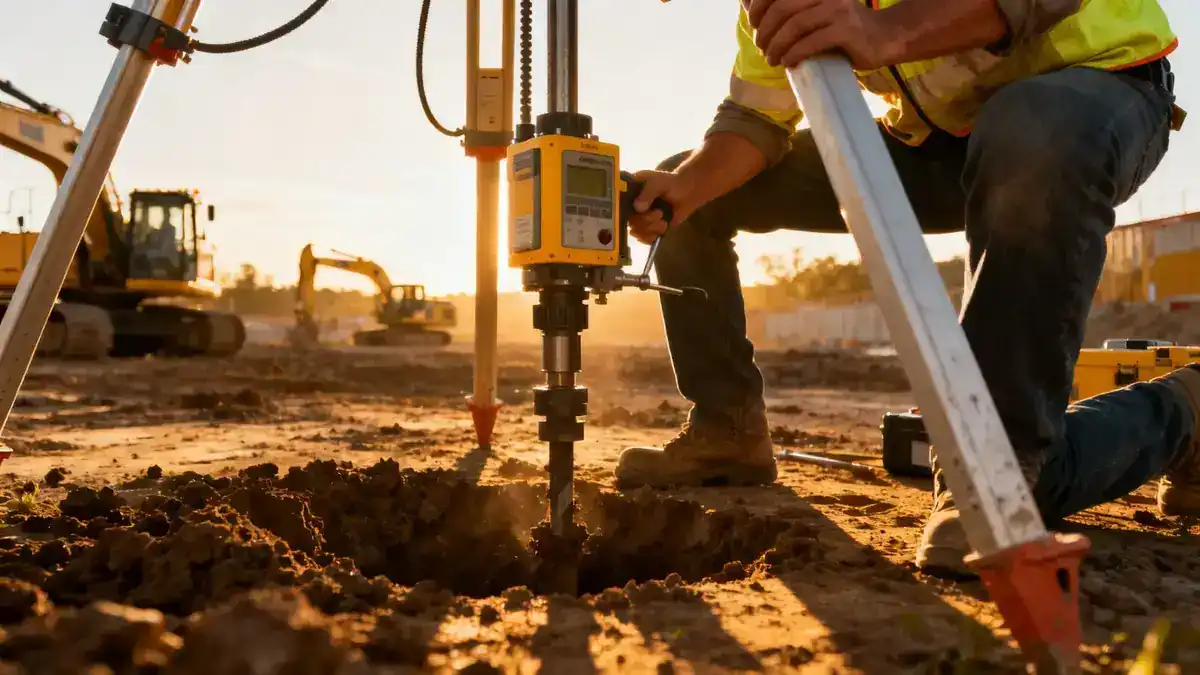
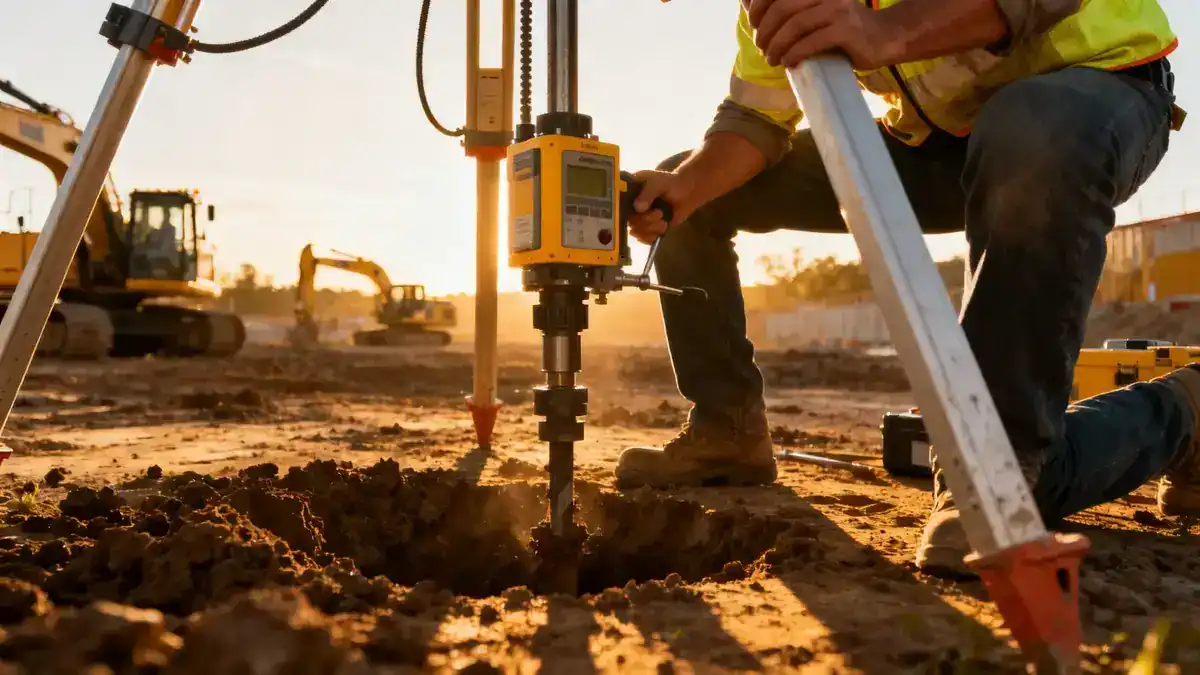
Our SPT boring methodology follows the ASTM D1586 standard, employing a 63.5 kg hammer dropped 760 mm to drive a split-barrel sampler. We record blow counts for each 150 mm increment, with the N-value taken as the sum of the last two increments. Our drills are equipped with automatic hammers to ensure energy efficiency within 60±10% of theoretical. Borehole advancement uses rotary drilling with bentonite mud or hollow-stem augers, maintaining borehole stability. Samples are logged in the field and transported to our soil mechanics laboratory for moisture content, grain size, and Atterberg limits. We routinely perform SPT at 1.5 m intervals to a maximum depth of 30 m, depending on project requirements. Corrections for overburden pressure and rod length are applied per ASTM D4633.
Reference Technical Parameters
| Parameter | Reference Value |
|---|---|
| Hammer Weight | 63.5 kg |
| Drop Height | 760 mm |
| Sampler Dimensions | 35 mm ID, 50.8 mm OD |
| Maximum Depth | 30 m |
| Typical N-Value Range | 4 to 50 blows/300 mm |
Local Considerations — Canada
Canada's seismic and climatic zones directly influence SPT boring practices. In high-seismic regions like Vancouver and Abbotsford, we conduct deeper borings to assess liquefaction potential using N-value corrections for fines content. In prairie cities such as Airdrie and Barrie, glacial till and lacustrine clays require careful sampling to avoid disturbance. Our crews are trained to handle frozen ground in northern climates and to coordinate with municipal utilities in dense urban areas like Brampton and Ajax. Each project receives a site-specific plan that accounts for local geology, groundwater conditions, and regulatory requirements, ensuring data quality across all regions.
Request a Quote
Our team reviews your project and issues an initial report at no cost.
Or write us directly at [email protected]
Applicable Standards
- ASTM D1586: Standard Test Method for Standard Penetration Test (SPT)
- ASTM D4633: Standard Test Method for Energy Efficiency of SPT Hammer Systems
- Canadian Foundation Engineering Manual (CFEM) 4th Edition
- National Building Code of Canada 2020 (Seismic Provisions)
Frequently Asked Questions
What is the standard depth interval for SPT sampling?
We typically perform SPT at 1.5 m intervals, but this can be adjusted to 0.75 m in critical zones or for detailed liquefaction assessments. The standard interval ensures representative N-values while balancing project timelines and costs.
How do you handle SPT in gravelly soils?
In gravelly soils, the split-barrel sampler may encounter refusal. We then use a larger diameter sampler (2.5-inch) or transition to a Becker hammer test. Corrections for gravel content are applied per CFEM guidelines to estimate relative density.
What is the typical turnaround time for SPT boring results?
Preliminary field logs are provided within 24 hours of drilling. Final laboratory results, including moisture content and gradation, are delivered within 7–10 business days. Urgent projects can be expedited upon request.
How much does SPT boring cost in Canada?
Costs typically range from $740 to $1,030 per borehole, depending on depth, accessibility, number of tests, and location. Remote sites or those requiring specialized equipment may incur additional charges. We recommend requesting a project-specific quote for accurate pricing.