Methodology
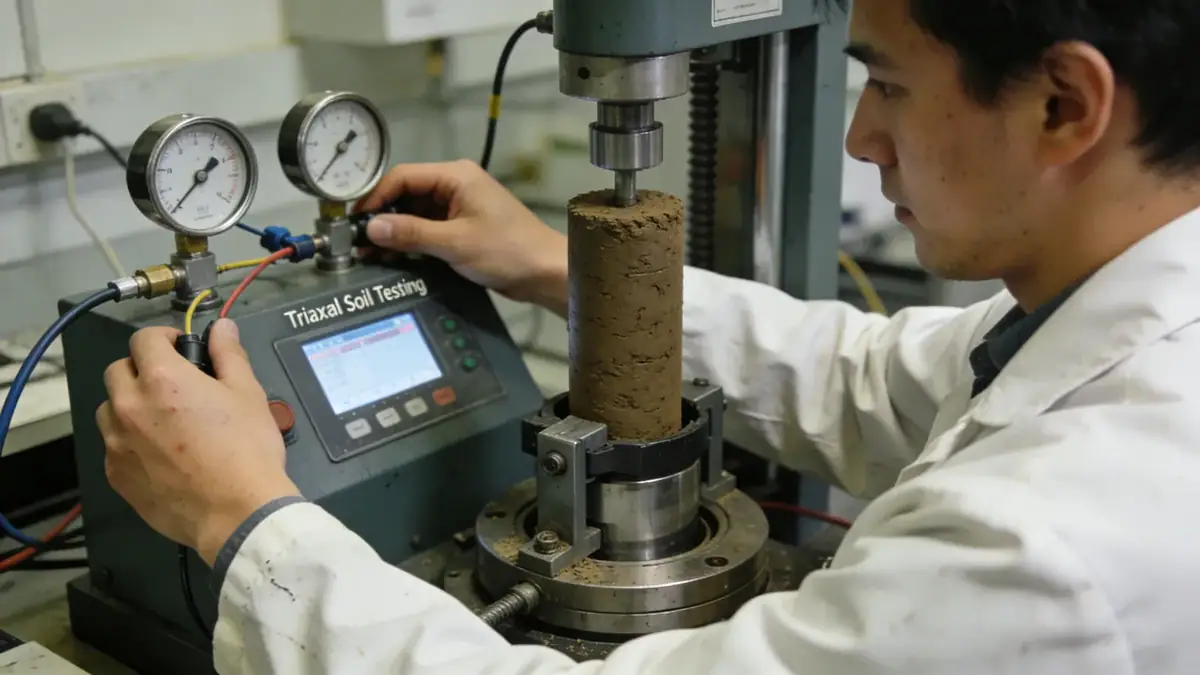
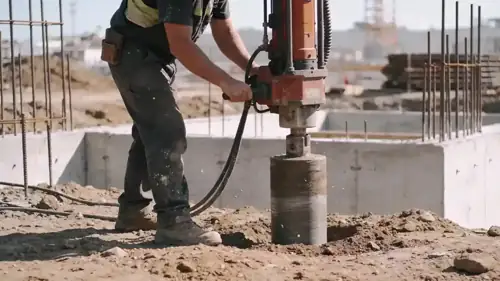
Our methodology integrates field exploration, laboratory testing, and advanced analysis to characterize subsurface conditions. We employ standard penetration testing (SPT) following ASTM D1586, with boreholes typically advanced to depths of 10 to 30 meters depending on project requirements. Soil samples are retrieved using split-spoon samplers and thin-walled tubes for subsequent laboratory evaluation. Our Soil Mechanics Laboratory performs classification, strength, and consolidation tests in accordance with Canadian standards. For slope stability and retaining wall design, we utilize limit equilibrium and finite element methods, calibrated against field measurements. This systematic approach ensures that our recommendations are both technically sound and cost-effective.
Reference Technical Parameters
| Parameter | Reference Value |
|---|---|
| SPT Blow Count (N-value) | 4–50 blows/300 mm |
| Borehole Depth Range | 10–30 m |
| Soil Types Encountered | Glacial till, clay, sand, silt, peat |
| Groundwater Depth | 1–15 m below surface |
| Seismic Zone Factor (Sa(0.2)) | 0.12–0.40 g |
Local Considerations — Canada
Canada's diverse geology presents unique challenges for geotechnical engineering. In the west, the Fraser River delta and mountainous terrain require careful evaluation of liquefaction potential and slope stability. The Canadian Shield in the east features shallow bedrock and glacial deposits, while the southern Ontario region is characterized by glacial tills and clay plains. Seismic hazard varies significantly, with higher risks in British Columbia and the St. Lawrence Valley, as defined by the National Building Code of Canada. Our team applies region-specific knowledge, including experience with projects in Abbotsford, to ensure compliance with local regulations and optimal foundation design.
Request a Quote
Our team reviews your project and issues an initial report at no cost.
Or write us directly at [email protected]
Applicable Standards
- National Building Code of Canada (NBC) 2020
- ASTM D1586 Standard Test Method for SPT
- CSA A23.3 Design of Concrete Structures
- Canadian Foundation Engineering Manual (CFEM)
Frequently Asked Questions
What is the typical scope of a geotechnical investigation in Canada?
A standard investigation includes boreholes, SPT testing, soil sampling, laboratory analysis, and a report with recommendations for foundations, earthworks, and pavements. The depth and number of boreholes depend on the structure's size and local geology.
How does seismic hazard affect foundation design in Canada?
Seismic hazard varies by region; for example, Vancouver has high seismicity requiring detailed liquefaction analysis and ductile detailing. The NBC provides site-specific spectral accelerations that influence foundation type and reinforcement.
What soil conditions are commonly found in Canadian urban centers?
Common soils include glacial tills (dense, low compressibility), marine clays (soft, high plasticity), and organic deposits (peat). Each requires specific testing and design approaches to ensure long-term performance.