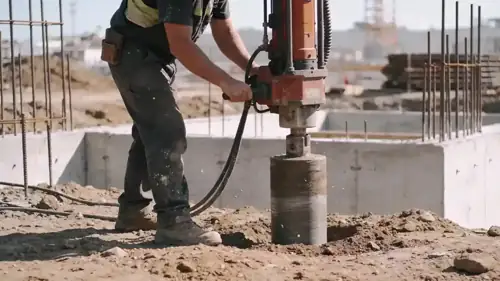
Methodology
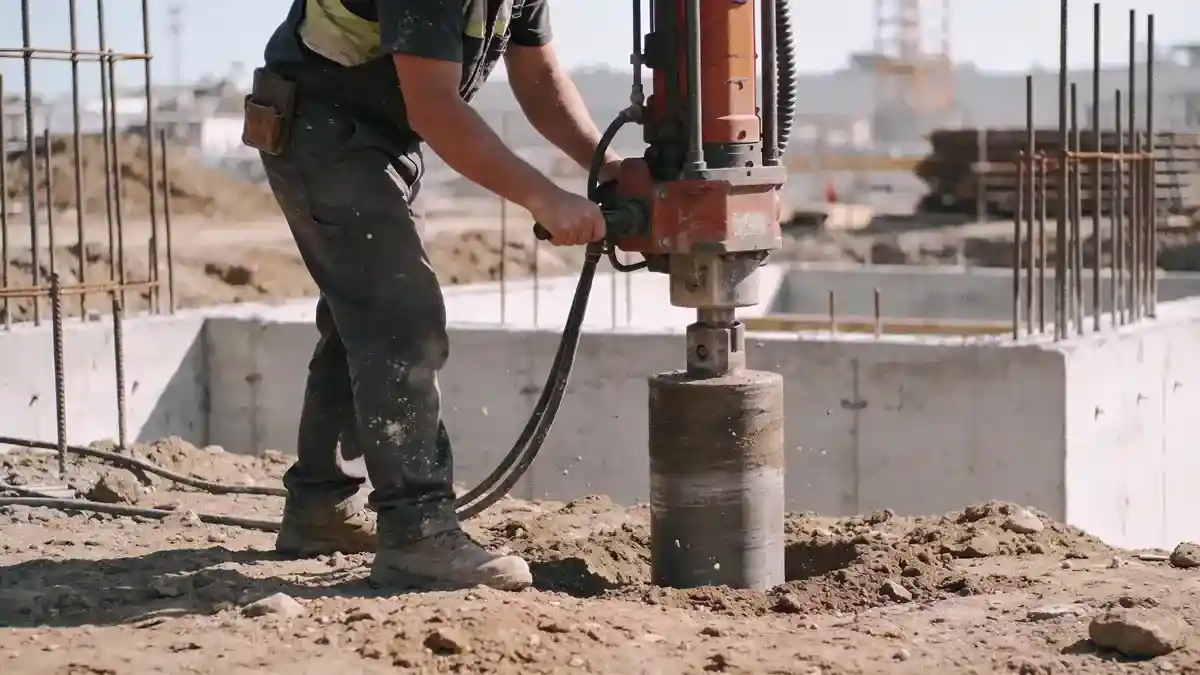
Our approach to geotechnical engineering in Burnaby begins with a thorough review of existing geological maps and borehole records. We then design a subsurface investigation program tailored to the site's specific conditions, typically including spt boring to obtain soil samples and measure N-values, as well as soil mechanics laboratory testing to classify soils and determine strength parameters. Fieldwork follows ASTM D1586 standards for SPT, with sample intervals every 1.5 m. We integrate these data with local seismic hazard models to develop foundation recommendations that comply with the British Columbia Building Code.
Reference Technical Parameters
| Parameter | Reference Value |
|---|---|
| Predominant soil type | Glaciomarine silt and clay (Capilano sediments), with glacial till and bedrock on slopes |
| Maximum seismic acceleration (PGA) | 0.35g to 0.45g (Site Class C/D, per NBCC 2020) |
| Typical groundwater level | 1.5 m to 4.5 m below surface (varies seasonally and with topography) |
| Bedrock depth | 5 m to >30 m (shallower on ridges, deeper in valleys) |
| Typical N60 range (SPT) | 4–15 blows/0.3 m in soft clays; >50 in till and bedrock |
Local Considerations — Burnaby
Burnaby's geology is dominated by glaciomarine deposits of the Capilano Sediments, which include soft to firm clays and silts with variable sand layers. These soils are often compressible and may require deep foundations or ground improvement for heavy structures. Seismic hazard is moderate to high due to the Cascadia subduction zone and local crustal faults; site response analyses are critical for buildings on soft soils. The contrast between the low-lying areas near the Fraser River and the glacial till on Burnaby Mountain often dictates different foundation strategies. Our team frequently recommends slope stability assessments for developments on the steeper terrain. For projects requiring retaining structures, we refer to our retaining wall design service to address lateral earth pressures typical of the local soils.
Request a Quote
Our team reviews your project and issues an initial report at no cost.
Or write us directly at [email protected]
Services in Burnaby
Applicable Standards
- ASTM D1586 (Standard Penetration Test)
- NBCC 2020 (National Building Code of Canada)
- BCBC 2024 (British Columbia Building Code)
Frequently Asked Questions
What types of soil are most common in Burnaby?
The most common soils are glaciomarine clays and silts (Capilano Sediments), underlain by glacial till and bedrock on higher elevations. These fine-grained soils are often soft to firm and may be compressible, requiring careful geotechnical evaluation for foundation design.
Does Burnaby require seismic design for all buildings?
Yes, the British Columbia Building Code mandates seismic design for all structures in Burnaby due to the region's moderate-to-high seismicity. Site-specific seismic hazard analysis is typically required for important buildings or those on soft soils, following NBCC 2020 provisions.
Are geotechnical studies mandatory for residential projects in Burnaby?
For most single-family homes, a geotechnical study is not explicitly required unless the site is on steep slopes, in a floodplain, or underlain by soft soils. However, for townhouses, apartments, and commercial buildings, a geotechnical investigation is typically required by the municipality to ensure safe foundation design.