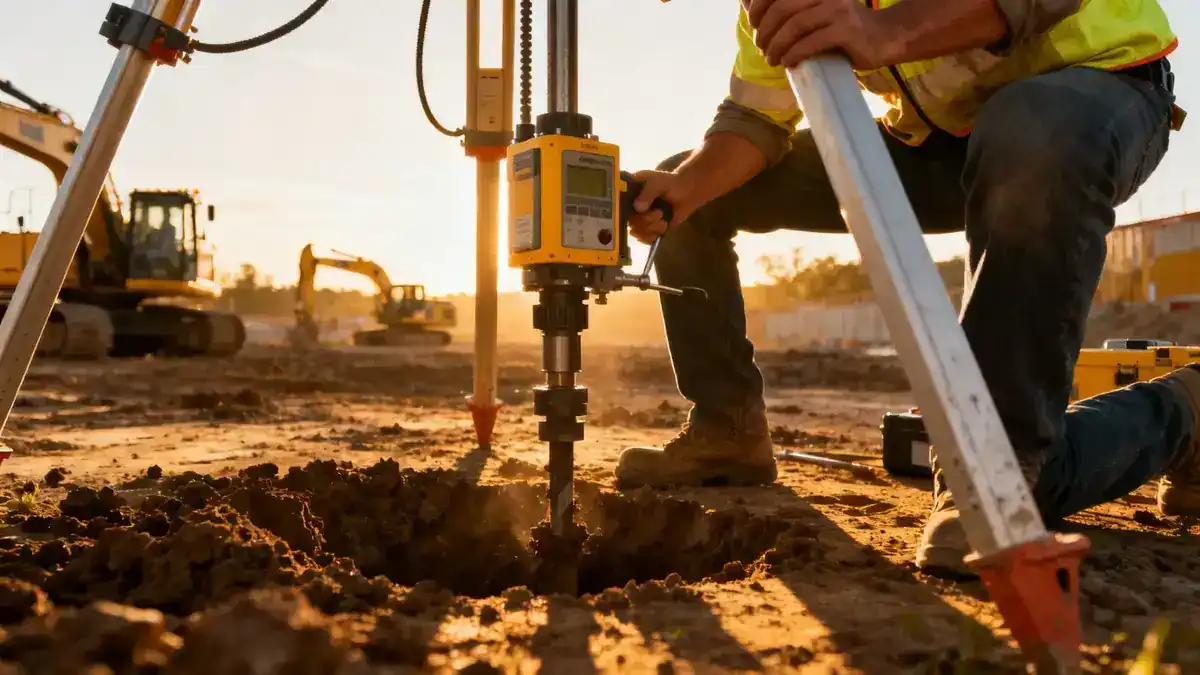
Methodology
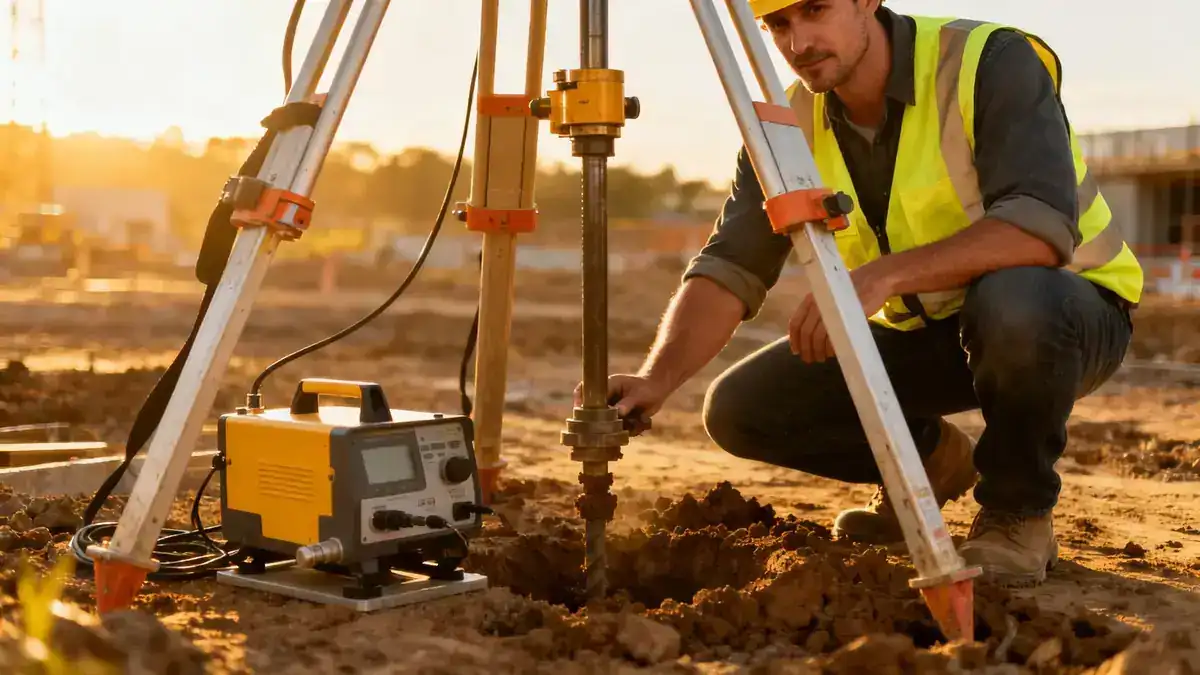
Our methodology for projects in Lévis follows a systematic approach that integrates field investigation, laboratory testing, and analytical modeling. We begin with a review of existing geological maps and borehole records to characterize the predominant soil units—typically Champlain Sea clay, glacial till, and fluvial sands. Subsurface exploration employs standard penetration testing (SPT) per ASTM D1586 at intervals of 1.0 to 1.5 m, supplemented by undisturbed sampling for advanced laboratory analysis. Our spt boring program is calibrated to the depth and variability of Lévis soils, ensuring representative data for foundation design. Seismic hazard assessments follow the National Building Code of Canada (NBCC) 2020, with site-specific response spectra derived from shear wave velocity measurements. This integrated framework allows our team to deliver defensible recommendations for shallow and deep foundations, slope stability, and earth retention.
Reference Technical Parameters
| Parameter | Reference Value |
|---|---|
| Predominant soil type | Champlain Sea clay (silty clay with traces of silt); glacial till and fluvial sands in upland areas |
| Maximum seismic acceleration (PGA) | 0.32g (NBCC 2020, Site Class C for firm ground; adjust for soft clay sites) |
| Typical groundwater level | 1.5–3.0 m below grade in lowland areas; deeper (>5 m) in Plateau and upland zones |
| Bedrock depth | 5–15 m in Plateau; 15–30 m in riverfront areas (Ordovician shale and limestone) |
| Typical N60 range | 2–8 blows/300 mm in soft clay; 10–30 blows/300 mm in glacial till (SPT, ASTM D1586) |
Local Considerations — Levis
Lévis sits on a complex glacial and post-glacial sequence. The lowlands along the St. Lawrence feature deep deposits of Champlain Sea clay—highly sensitive, compressible, and prone to settlement under load. Upland areas (e.g., Plateau) are underlain by denser glacial till and shallow bedrock. Seismic design is critical: the 1988 Saguenay earthquake (M6.0) demonstrated amplified shaking in soft clay basins. Groundwater levels are shallow near the river, requiring dewatering considerations for excavations. Typical projects include residential subdivisions on clay with preloading or piles, and commercial structures on till or rock. Our team also provides specialized services such as slope stability analysis for riverbank developments and retaining wall design for cut slopes. For broader regional context, refer to our geotechnical engineering in Montreal page, which covers similar geological settings and regulatory frameworks.
Request a Quote
Our team reviews your project and issues an initial report at no cost.
Or write us directly at [email protected]
Services in Levis
Applicable Standards
- ASTM D1586 (Standard Penetration Test)
- NBCC 2020 (National Building Code of Canada)
- CSA A23.3 (Concrete Design)
- CAN/CSA S6 (Canadian Highway Bridge Design Code)
- ASTM D2487 (Unified Soil Classification System)
- ASTM D2435 (One-Dimensional Consolidation Properties of Soils)
Frequently Asked Questions
What types of soil are most common in Lévis?
Lévis is underlain primarily by Champlain Sea clay in riverfront areas—a soft, highly sensitive silty clay. Upland zones feature glacial till (sandy silt with gravel) and shallow Ordovician shale bedrock. Fluvial sands and silts are also present in paleochannels. This variability requires site-specific investigation for every project.
Does the seismic code in Lévis require special geotechnical studies?
Yes. According to NBCC 2020, Lévis is in a moderate seismic zone with PGA up to 0.32g. For sites underlain by soft clay (Site Class E or F), site-specific response analysis is mandatory. Our team conducts shear wave velocity testing and liquefaction assessments to meet these requirements.
Are geotechnical studies mandatory for residential construction in Lévis?
For single-family homes on shallow foundations, a geotechnical study is not always required by the city, but it is highly recommended—especially on clay sites where differential settlement is a risk. For multi-unit residential or commercial projects, studies are mandatory per the Quebec Construction Code. Our firm provides cost-effective investigations tailored to project scale.