Methodology

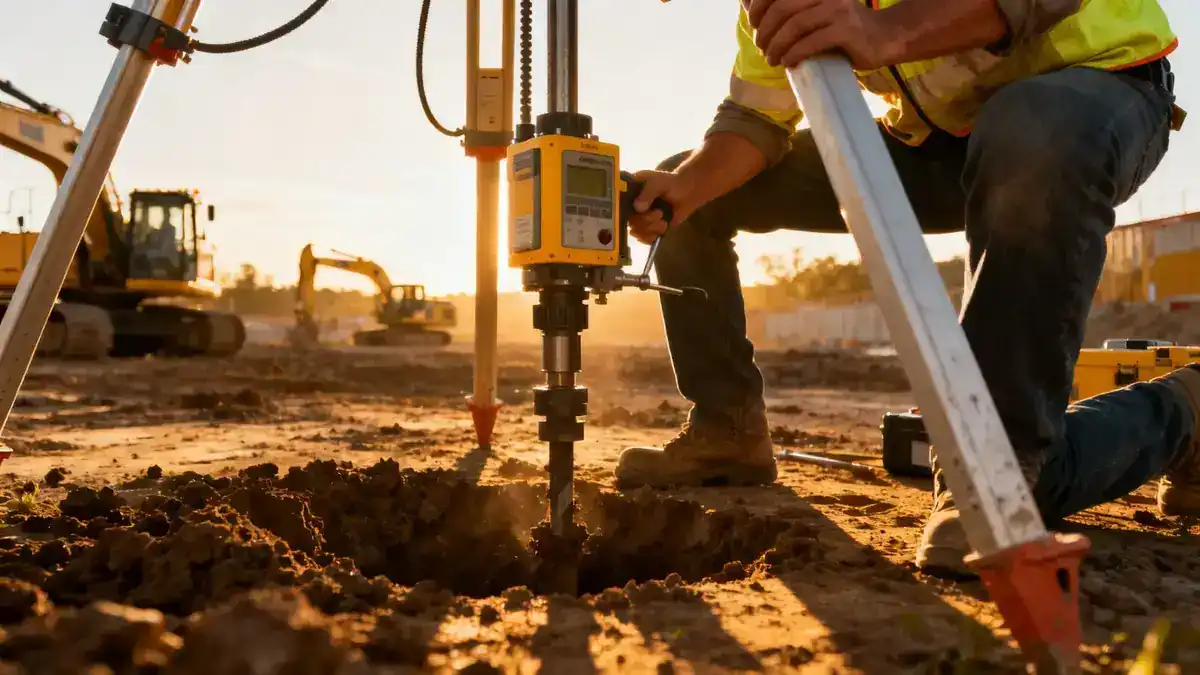
Our methodology in Saguenay begins with a comprehensive review of existing geological maps and borehole records from the region. We then conduct field investigations using techniques such as spt boring to obtain soil samples and measure resistance at depth, following ASTM D1586. In areas of soft marine clay, cone penetration testing (CPT) provides continuous stratigraphic profiles. Laboratory testing includes grain size analysis, Atterberg limits, and unconfined compression tests to classify soils and determine engineering properties. Seismic hazard assessments incorporate the 2020 National Building Code of Canada (NBCC) seismic values for Saguenay, ensuring designs comply with local acceleration and site classification requirements.
Reference Technical Parameters
| Parameter | Reference Value |
|---|---|
| Predominant soil type | Glacial till, marine clay, sand |
| Maximum seismic acceleration (PGA) | 0.24g (NBCC 2020, Site Class C) |
| Typical groundwater level | 1.5–3.0 m below surface |
| Bedrock depth | 5–30 m (shallower in Chicoutimi) |
| Typical N60 range | 10–40 (till); 2–8 (clay) |
Local Considerations — Saguenay
Saguenay's geology is dominated by marine clay deposits from the Laflamme Sea, which are highly sensitive and prone to landslides. The Saguenay Graben also introduces seismic activity, with a design PGA of 0.24g per NBCC 2020. Our team addresses these hazards through site-specific slope stability analyses and foundation recommendations. For projects in the borough of La Baie, where thick clay overlies bedrock, deep foundations or ground improvement may be required. We also coordinate with local municipalities to adhere to regional by-laws. Our slope stability assessments are critical for hillside developments, while retaining wall design solutions mitigate earth pressures in cut-and-fill scenarios. For clients requiring broader expertise, we collaborate with our geotechnical engineering en Montreal hub to deliver consistent quality across Quebec.
Request a Quote
Our team reviews your project and issues an initial report at no cost.
Or write us directly at [email protected]
Services in Saguenay
Applicable Standards
- ASTM D1586
- NBCC 2020
- CSA A23.3
- Quebec Construction Code (Chapter 1, Building)
Frequently Asked Questions
What are the typical soil types encountered in Saguenay?
Saguenay soils are predominantly marine clay and silt from the post-glacial Laflamme Sea, underlain by glacial till and bedrock. In upland areas, till and sand are more common. The clay is often soft to firm, with high sensitivity, requiring careful geotechnical assessment for foundations.
How does seismic design apply to projects in Saguenay?
Saguenay is in a moderate seismic zone per NBCC 2020, with a peak ground acceleration (PGA) of 0.24g for Site Class C. Site-specific seismic hazard analysis may be required for important structures. Soil conditions can amplify ground motions, so site classification and liquefaction assessments are standard.
Are geotechnical studies mandatory for construction in Saguenay?
Yes, the Quebec Construction Code requires geotechnical investigations for most buildings. The scope depends on building size and soil conditions. For residential projects, a minimum of two boreholes is common; larger structures require more extensive studies to ensure safety and code compliance.