Methodology

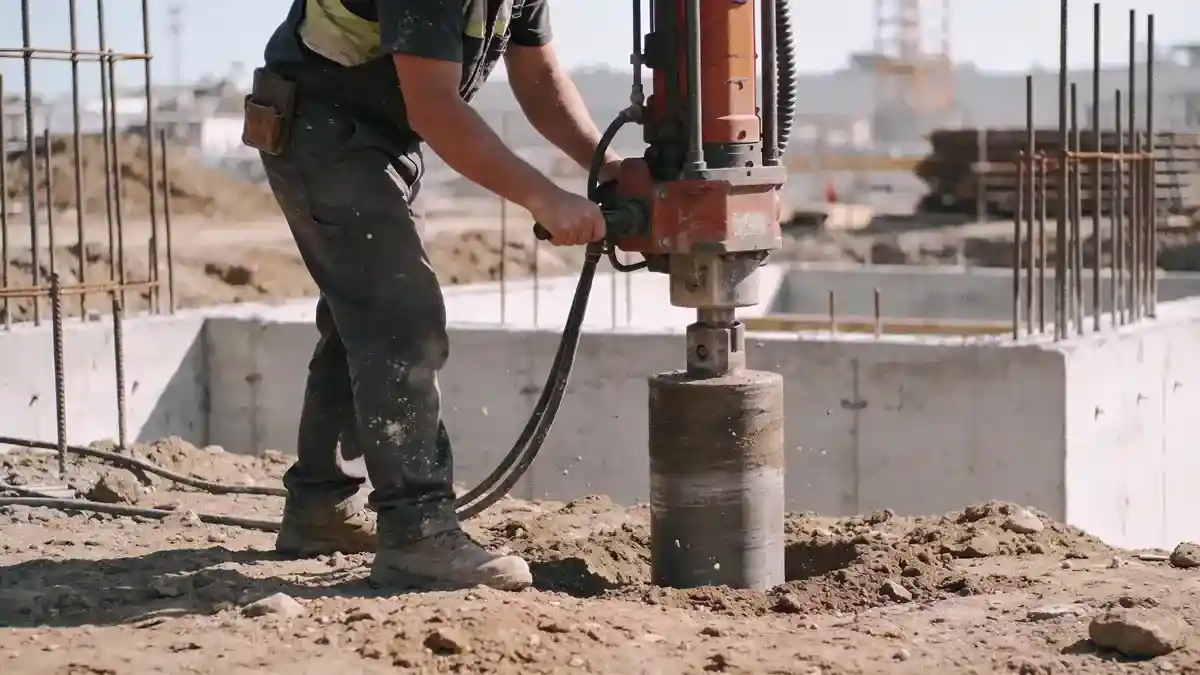
Our methodology in Saint Jerome follows a phased approach aligned with ASTM D1586 for standard penetration testing. We first conduct a desk study of existing geological maps and borehole records, then deploy field crews for spt boring at strategic locations. Sampling intervals are typically every 1.5 m to capture soil stratification. Groundwater levels are monitored during drilling and with standpipes. Samples are logged visually and transported to our laboratory for classification and strength testing. This systematic process provides reliable data for foundation design in Saint Jerome's varied terrain.
Reference Technical Parameters
| Parameter | Reference Value |
|---|---|
| Predominant Soil Type | Glacial till and marine clay (Leda clay sensitive) |
| Maximum Seismic Acceleration (PGA) | 0.2g to 0.3g (per National Building Code of Canada 2020) |
| Typical Groundwater Level | 1.5 m to 3 m below surface |
| Bedrock Depth | 5 m to 25 m (variable, Canadian Shield) |
| Typical N60 Range | 4 to 30 blows/0.3 m (clay to dense till) |
Local Considerations — Saint Jerome
Saint Jerome's subsurface reflects its position at the edge of the St. Lawrence Lowlands and the Laurentian Highlands. The predominant Leda clay is highly sensitive and prone to landslides when disturbed, requiring careful slope stability analysis. In contrast, the northern sectors feature shallow bedrock of the Canadian Shield, allowing rock-socketed foundations. Urban infill projects often encounter fill and organic deposits. Our team references the regional experience of geotechnical engineering in Montreal to benchmark local conditions. Seismic risk is moderate, with PGA up to 0.3g, necessitating site-specific response spectra per NBCC 2020. Groundwater is generally shallow, demanding dewatering plans for excavations.
Request a Quote
Our team reviews your project and issues an initial report at no cost.
Or write us directly at [email protected]
Services in Saint Jerome
Applicable Standards
- ASTM D1586
- ASTM D2487
- ASTM D4318
- National Building Code of Canada 2020
- CSA A23.3
- Quebec Construction Code
Frequently Asked Questions
What are the typical soil conditions in Saint Jerome?
Saint Jerome features glacial tills, sensitive marine clays (Leda clay), and occasional organic deposits. Bedrock depth varies from shallow (5 m) in the north to deeper (25 m) in the south. Groundwater is typically encountered at 1.5 to 3 m depth.
Is a geotechnical study mandatory for construction in Saint Jerome?
Yes, the Quebec Construction Code requires a geotechnical study for buildings of three stories or more, or for any structure on sensitive clay sites. Local municipalities may also require studies for single-family homes in landslide-prone areas.
What seismic design parameters apply in Saint Jerome?
Saint Jerome falls under moderate seismic hazard with PGA of 0.2g to 0.3g per NBCC 2020. Site-specific seismic response analysis is recommended for sensitive clay sites to account for amplification and liquefaction potential.