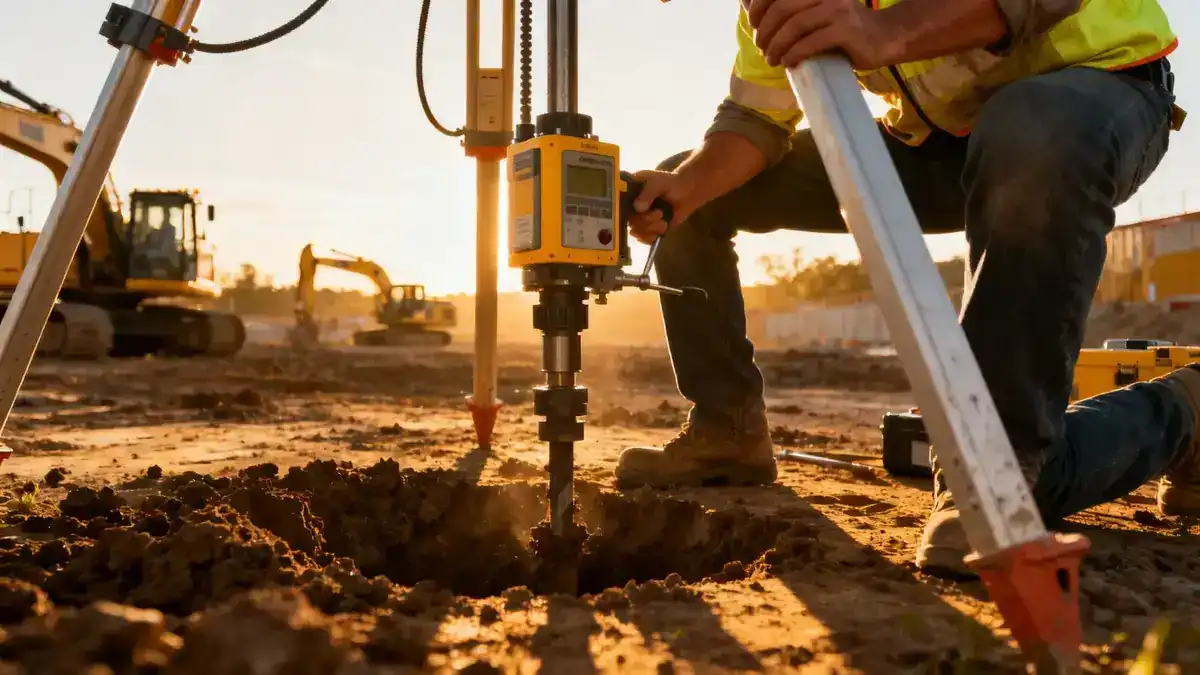
Methodology
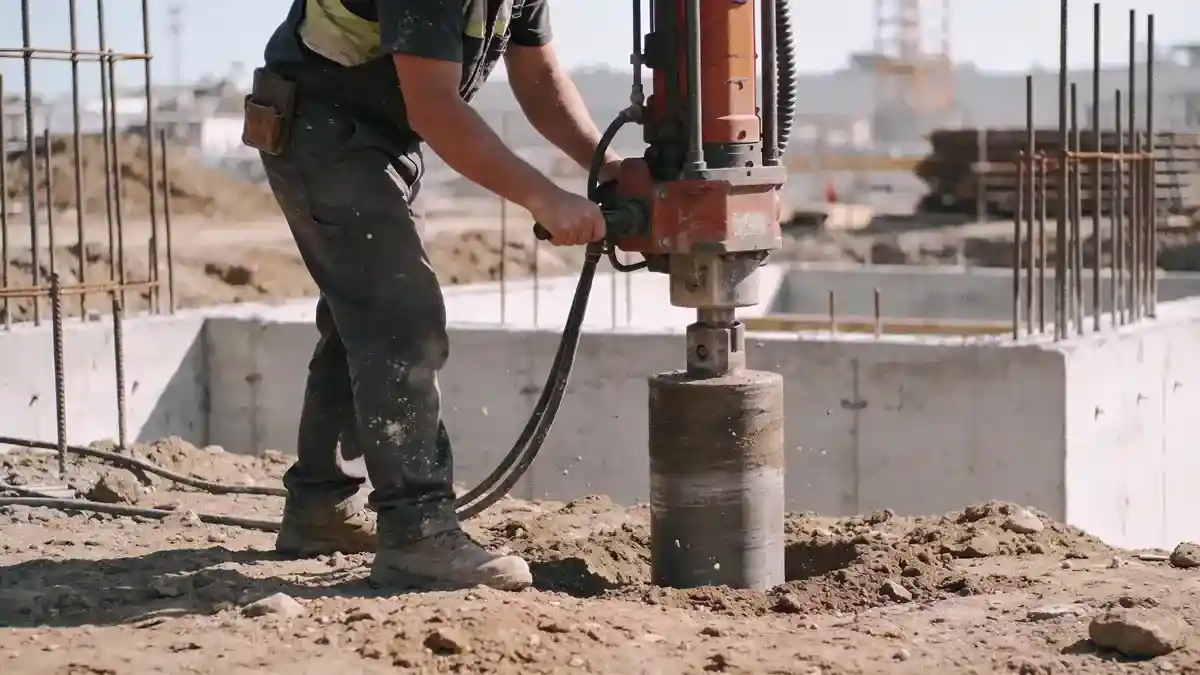
Our methodology in Gatineau follows a phased approach: site reconnaissance, geophysical surveys, and intrusive investigation such as spt boring to characterize subsurface conditions. We employ hollow-stem augers and mud rotary techniques to recover soil samples and perform standard penetration tests (SPT) per ASTM D1586. Laboratory testing includes index properties, strength, and consolidation. All work integrates local seismic hazard data (PGA up to 0.32g) and groundwater observations. Our reports provide clear geotechnical parameters for foundation design, slope stability, and retaining wall construction.
Reference Technical Parameters
| Parameter | Reference Value |
|---|---|
| Predominant soil type | Glacial till, marine clay (Leda clay), alluvial deposits |
| Maximum seismic acceleration (PGA) | 0.32g (NBC 2020 Site Class C) |
| Typical groundwater level | 1.5–4.0 m below grade |
| Bedrock depth | 5–20 m (Canadian Shield gneiss/limestone) |
| Typical N60 range (SPT) | 4–12 in clay; 20–50 in till |
Local Considerations — Gatineau
Gatineau's geology is dominated by Champlain Sea clay and glacial till over Precambrian bedrock. Sensitive Leda clay in sectors like Hull and Aylmer poses challenges for excavation and foundation stability. Groundwater levels are shallow near the Ottawa River, requiring dewatering considerations. Seismic hazard is moderate (PGA 0.32g), mandating dynamic analysis per NBC 2020. Our team coordinates with local municipalities and references the Quebec Construction Code. For broader context, our geotechnical engineering en Ottawa hub provides regional insights. Additionally, soil mechanics laboratory testing supports site-specific characterization.
Request a Quote
Our team reviews your project and issues an initial report at no cost.
Or write us directly at [email protected]
Services in Gatineau
Applicable Standards
- National Building Code of Canada 2020 (NBC 2020)
- Quebec Construction Code (Chapter I – Building)
- ASTM D1586 – Standard Test Method for Penetration Test and Split-Barrel Sampling
- ASTM D2487 – Standard Practice for Classification of Soils for Engineering Purposes
- CAN/CSA A23.3 – Design of Concrete Structures
Frequently Asked Questions
What soil types are commonly found in Gatineau?
Gatineau features glacial tills, Champlain Sea clay (sensitive Leda clay), and alluvial deposits near waterways. These soils vary in strength and compressibility, requiring careful geotechnical characterization.
Is a geotechnical study mandatory for new construction in Gatineau?
Yes, the Quebec Construction Code requires a geotechnical investigation for most buildings, especially those with deep foundations or in areas with sensitive clay. Local bylaws may also mandate studies for subdivisions.
How does seismic hazard affect foundation design in Gatineau?
Gatineau is in seismic zone with PGA up to 0.32g. Soils like Leda clay can amplify shaking, requiring site-specific response spectra and dynamic analysis per NBC 2020 to ensure foundation safety.