Methodology
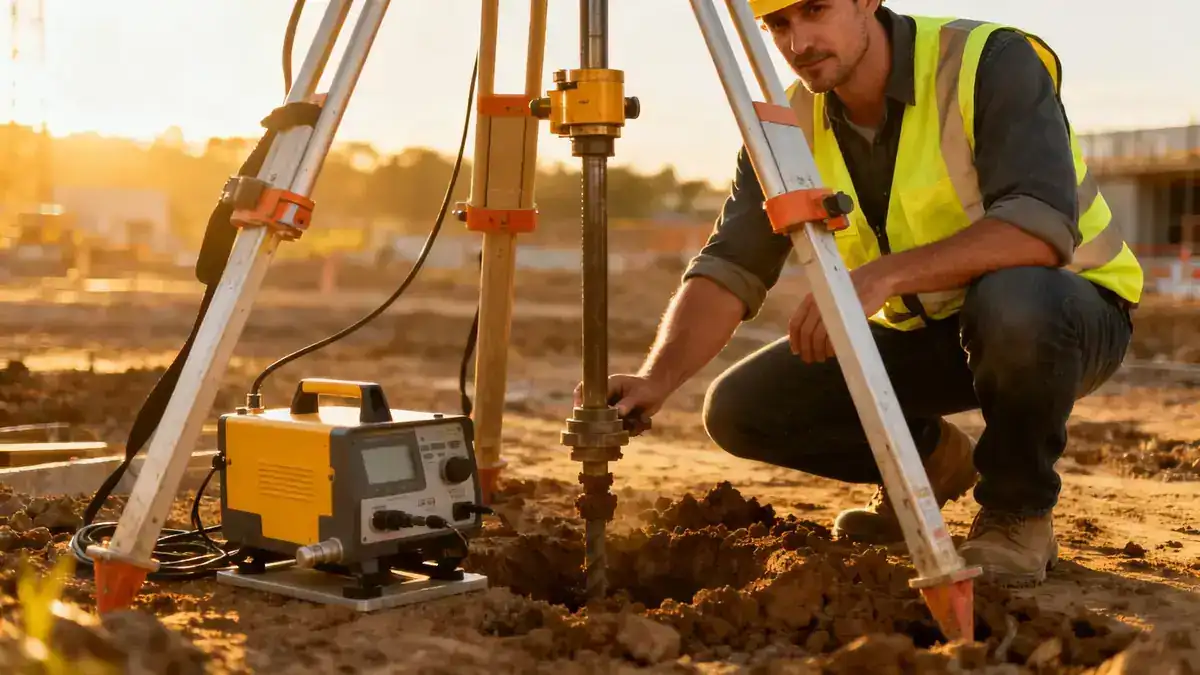
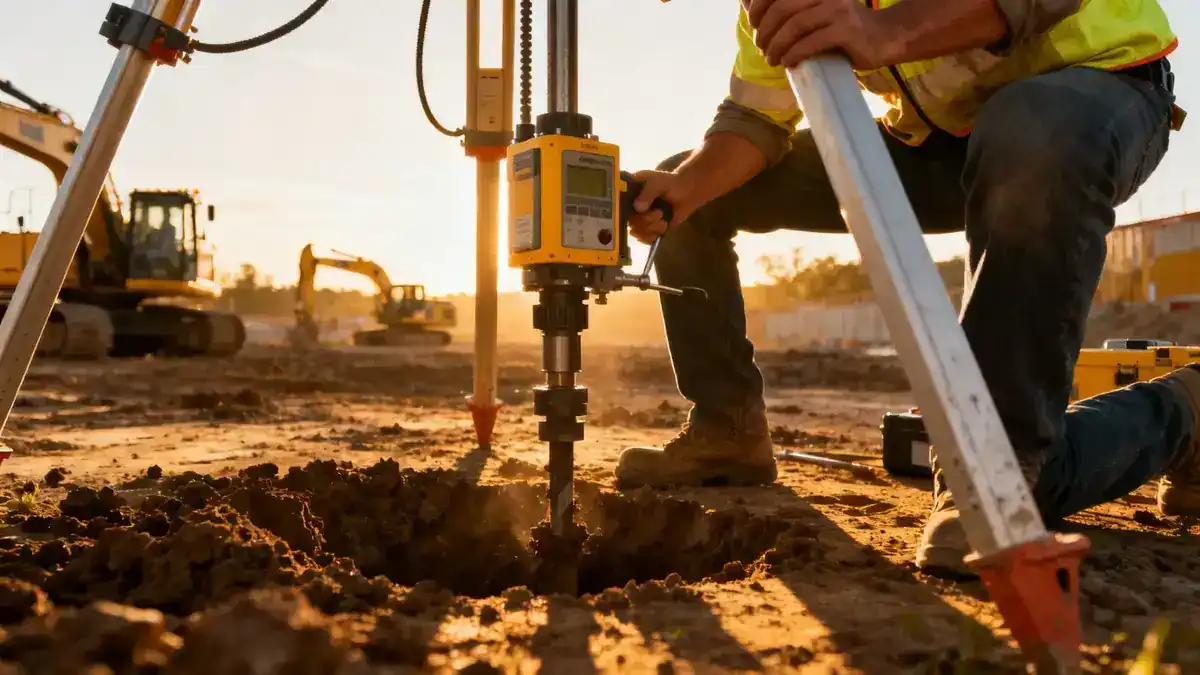
Our methodology for geotechnical engineering in Cambridge Ontario begins with a detailed desk study of regional geology and historical borehole records. We then conduct field investigations using SPT boring at strategic locations to characterize soil strata and groundwater conditions. In the laboratory, we perform index properties tests, including grain size analysis and Atterberg limits, along with strength and consolidation tests to determine design parameters. All work adheres to ASTM D1586 for standard penetration testing and ASTM D2487 for soil classification. Our integrated approach ensures accurate site characterization for foundation design and earthworks.
Reference Technical Parameters
| Parameter | Reference Value |
|---|---|
| Predominant soil type | Glacial till with sand and gravel lenses |
| Maximum seismic acceleration (PGA) | 0.15g to 0.20g (NBCC 2020) |
| Typical groundwater level | 2-5 m below ground surface |
| Bedrock depth | 10-30 m (Silurian dolostone/shale) |
| Typical N60 range | 10-30 blows/ft (sandy till) |
Local Considerations — Cambridge Ontario
Cambridge Ontario lies within the Great Lakes–St. Lawrence Lowlands, characterized by glacial till overlying Paleozoic bedrock. The Grand River valley introduces alluvial deposits with variable bearing capacity. Seismic hazard is moderate, with PGA values of 0.15–0.20g per NBCC 2020. Groundwater levels fluctuate seasonally, typically 2–5 m deep. Older industrial areas may contain fill with unknown contaminants. Our team integrates these factors into each study, referencing our soil mechanics laboratory for accurate soil classification and strength testing. For region-wide context, we coordinate with our geotechnical engineering services in Toronto to ensure consistency across Southern Ontario.
Request a Quote
Our team reviews your project and issues an initial report at no cost.
Or write us directly at [email protected]
Services in Cambridge Ontario
Applicable Standards
- National Building Code of Canada (NBCC) 2020
- Ontario Building Code (OBC) 2012
- Canadian Foundation Engineering Manual (CFEM) 5th Edition
- ASTM D1586 – Standard Test Method for Standard Penetration Test (SPT)
- ASTM D2487 – Standard Practice for Classification of Soils for Engineering Purposes
Frequently Asked Questions
What soil types are commonly found in Cambridge Ontario?
The predominant soils are glacial till, consisting of silty sand to sandy silt with gravel and cobbles. Alluvial deposits along the Grand River include stratified sand, silt, and clay. Local variations exist due to glacial history, requiring site-specific investigation.
What seismic design considerations apply in Cambridge Ontario?
Per NBCC 2020, Cambridge is in seismic category with PGA of 0.15–0.20g. Site-specific response spectra may be required for important structures. Soil amplification due to soft alluvial deposits can increase demands, so geotechnical input is essential for foundation design.
Are geotechnical studies mandatory for construction in Cambridge?
While not always legally required for all projects, the Ontario Building Code mandates geotechnical investigation for buildings on poor soil, near slopes, or with deep foundations. Most municipalities and engineers require a report for permit approval, especially for commercial or multi-unit residential projects.