Methodology
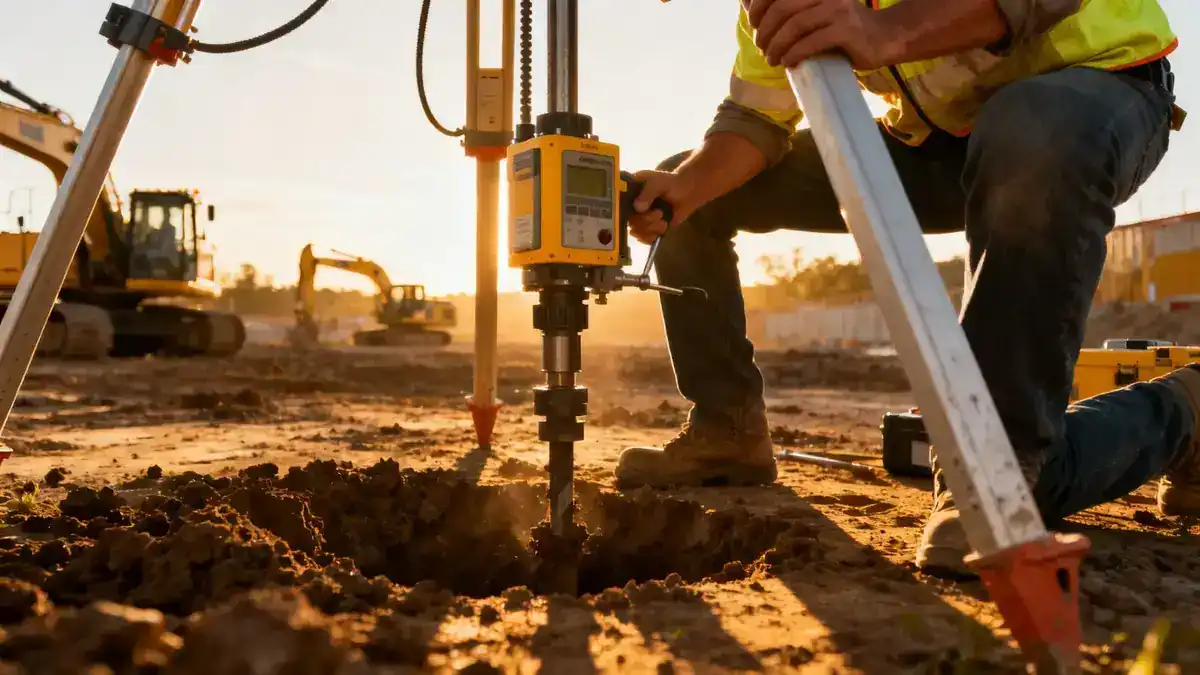
Our methodology for geotechnical engineering in Sarnia begins with a thorough review of existing geological maps and borehole records. We then conduct field investigations using standard penetration testing (SPT) per ASTM D1586, with sampling intervals typically every 1.5 m to depths of 10–15 m for low-rise structures. For larger projects, we extend borings to 30 m and incorporate spt boring to assess bearing capacity and liquefaction potential. In the laboratory, we perform index properties, grain size analysis, and consolidation tests to characterize soil behavior. This integrated approach allows us to develop site-specific geotechnical models that inform foundation design, slope stability, and earthwork recommendations for Sarnia's diverse project types.
Reference Technical Parameters
| Parameter | Reference Value |
|---|---|
| Predominant Soil Type | Glacial till with interbedded clay and sand |
| Maximum Seismic Acceleration (PGA) | 0.15g (based on NBCC 2020) |
| Typical Groundwater Level | 2–5 m below ground surface |
| Bedrock Depth | 20–50 m (Devonian limestone/shale) |
| Typical N60 Range | 10–30 blows/300 mm in till |
Local Considerations — Sarnia
Sarnia's geology is dominated by glacial till overlying Devonian bedrock, with localized deposits of lacustrine clay and sand. The high water table poses challenges for excavations and below-grade structures, often requiring dewatering or watertight designs. Seismic hazard is moderate, with a peak ground acceleration of 0.15g per NBCC 2020, influencing liquefaction assessments in loose sands near the St. Clair River. Older industrial areas may contain uncontrolled fill or contaminated soils, necessitating environmental geotechnical coordination. Our team integrates these factors into every project, referencing the soil mechanics laboratory for advanced testing on sensitive clays. For broader regional context, our geotechnical engineering en Toronto operations provide additional insights into Ontario's subsurface variability.
Request a Quote
Our team reviews your project and issues an initial report at no cost.
Or write us directly at [email protected]
Services in Sarnia
Applicable Standards
- ASTM D1586
- NBCC 2020
- Ontario Building Code (OBC) 2024
- CSA A23.3
Frequently Asked Questions
What are the typical soil conditions in Sarnia?
Sarnia's soils primarily consist of glacial till, with layers of clay, silt, and sand. The till is dense and provides good bearing capacity, but localized soft clay deposits and high groundwater require careful evaluation. Our investigations characterize these conditions for safe foundation design.
Is seismic design required for projects in Sarnia?
Yes, under NBCC 2020, Sarnia falls in a moderate seismic zone with a PGA of 0.15g. Seismic design is mandatory for most buildings, and site-specific response spectra may be needed for important structures. Our reports address liquefaction and dynamic soil behavior.
When are geotechnical studies mandatory in Sarnia?
The Ontario Building Code requires a geotechnical investigation for any building permit application where subsurface conditions may affect structural safety. This includes all new foundations, retaining walls, and excavations deeper than 1.2 m. Local bylaws may also require studies for shoreline developments.