Methodology
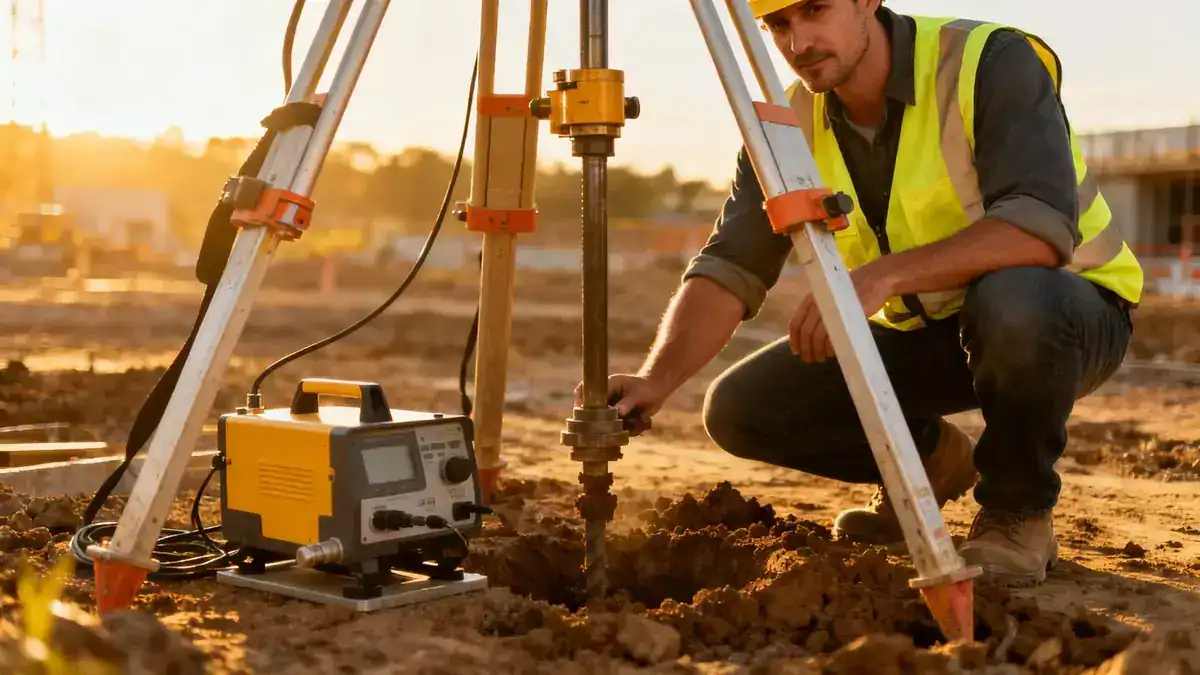
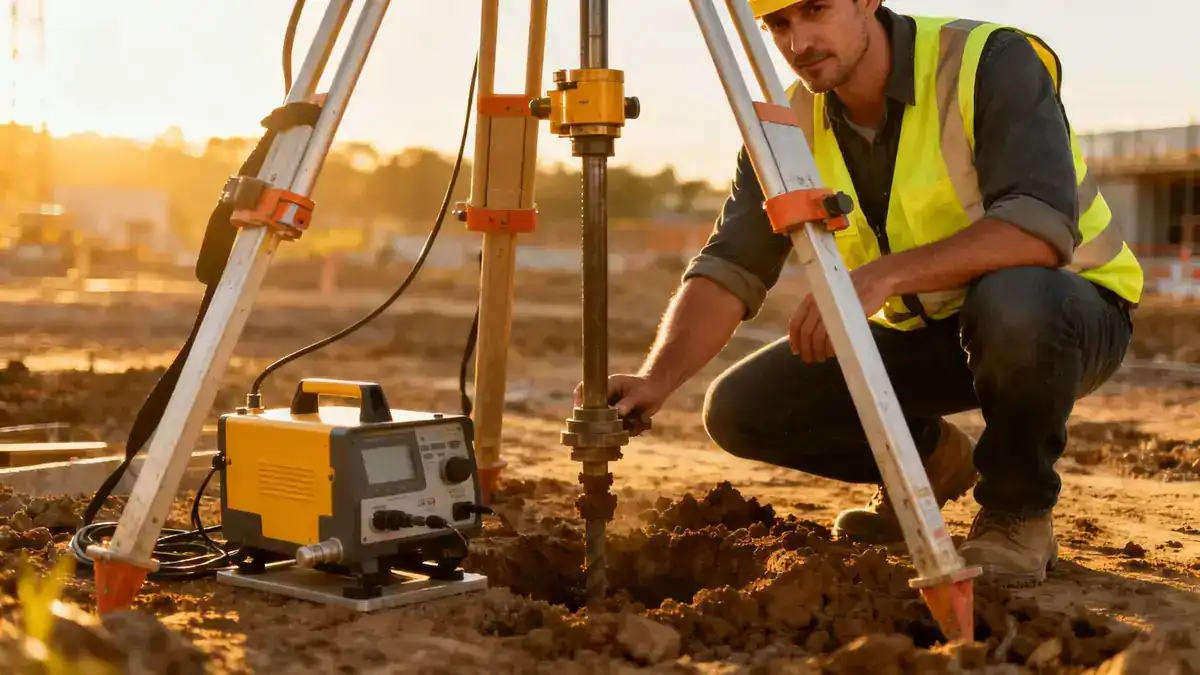
Our approach begins with a thorough review of existing geological maps and records for the Guelph area. We then conduct field investigations, including spt boring to obtain soil samples and measure N-values, which are critical for assessing bearing capacity. Laboratory testing, such as grain size analysis and Atterberg limits, follows ASTM D6913 and D4318 standards. Data integration allows us to develop site-specific geotechnical models, ensuring robust recommendations for shallow or deep foundations.
Reference Technical Parameters
| Parameter | Reference Value |
|---|---|
| Predominant soil type | Glacial till, silty sand, and clay |
| Maximum seismic acceleration (PGA) | 0.15 g (based on NBCC 2020) |
| Typical groundwater level | 2–5 m below surface |
| Bedrock depth | 10–30 m (limestone/dolostone) |
| Typical N60 range | 8–35 blows/300 mm |
Local Considerations — Guelph
Guelph's geology is dominated by glacial till overlying Silurian dolostone bedrock, with localized sand and gravel deposits. Groundwater levels can be shallow near the Speed River. Seismic hazard is moderate per NBCC 2020, with PGA up to 0.15 g. In older districts like the Ward, fill materials from historical development require careful investigation. New subdivisions on former agricultural land often encounter soft clay layers. Our team tailors investigations to these conditions, referencing NBCC 2020 and Ontario Building Code. For regional context, our geotechnical engineering in Toronto hub provides broader insights.
Request a Quote
Our team reviews your project and issues an initial report at no cost.
Or write us directly at [email protected]
Services in Guelph
Applicable Standards
- ASTM D1586 (Standard Penetration Test)
- ASTM D4318 (Atterberg Limits)
- ASTM D6913 (Particle Size Distribution)
- NBCC 2020 (Seismic Provisions)
- Ontario Building Code (OBC) Part 4
Frequently Asked Questions
What are the typical soil conditions for geotechnical projects in Guelph?
Guelph soils are primarily glacial till with varying amounts of sand, silt, and clay. Underlying bedrock is dolostone at depths of 10–30 m. Groundwater is often encountered at 2–5 m depth. These conditions influence foundation selection and necessitate site-specific testing.
Is a geotechnical study mandatory for construction in Guelph?
Yes, the Ontario Building Code requires a geotechnical report for most buildings, especially those with deep foundations or in areas with variable soil conditions. Local bylaws may also mandate studies for subdivisions or near watercourses to ensure safety and compliance.
How does seismic activity affect foundation design in Guelph?
Guelph falls under a moderate seismic hazard zone per NBCC 2020, with a peak ground acceleration of 0.15 g. Soil amplification from soft clay layers can increase design demands. Our analyses incorporate site-specific seismic response spectra to ensure structures meet code requirements.