Methodology
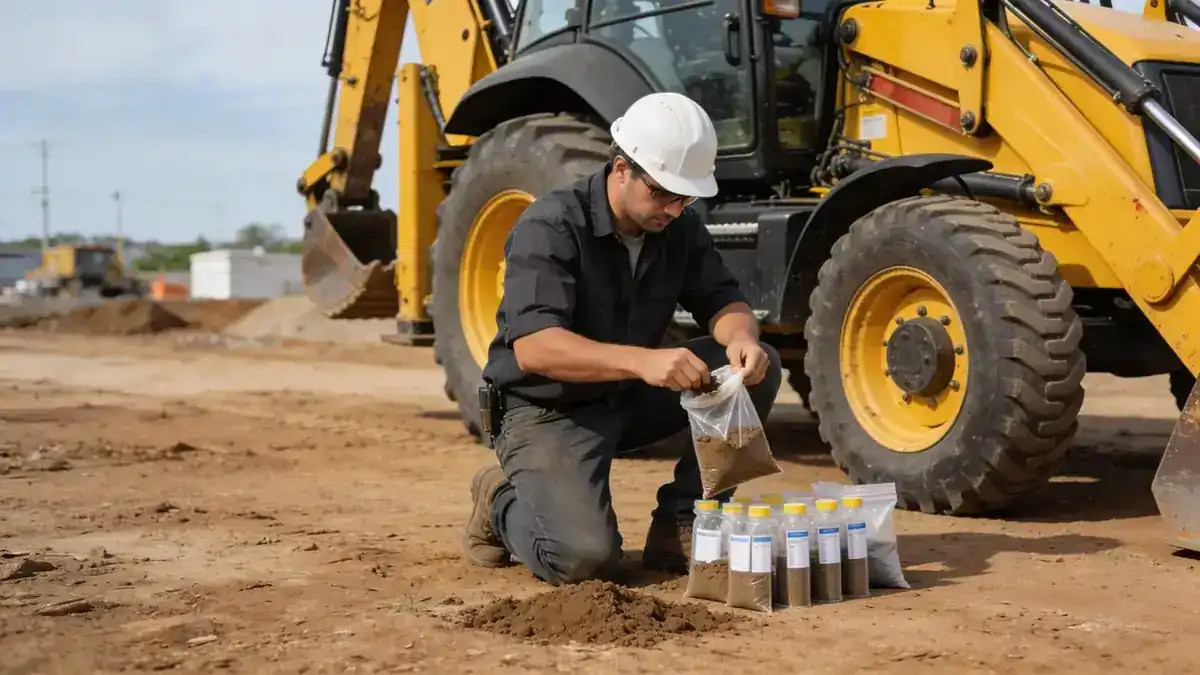
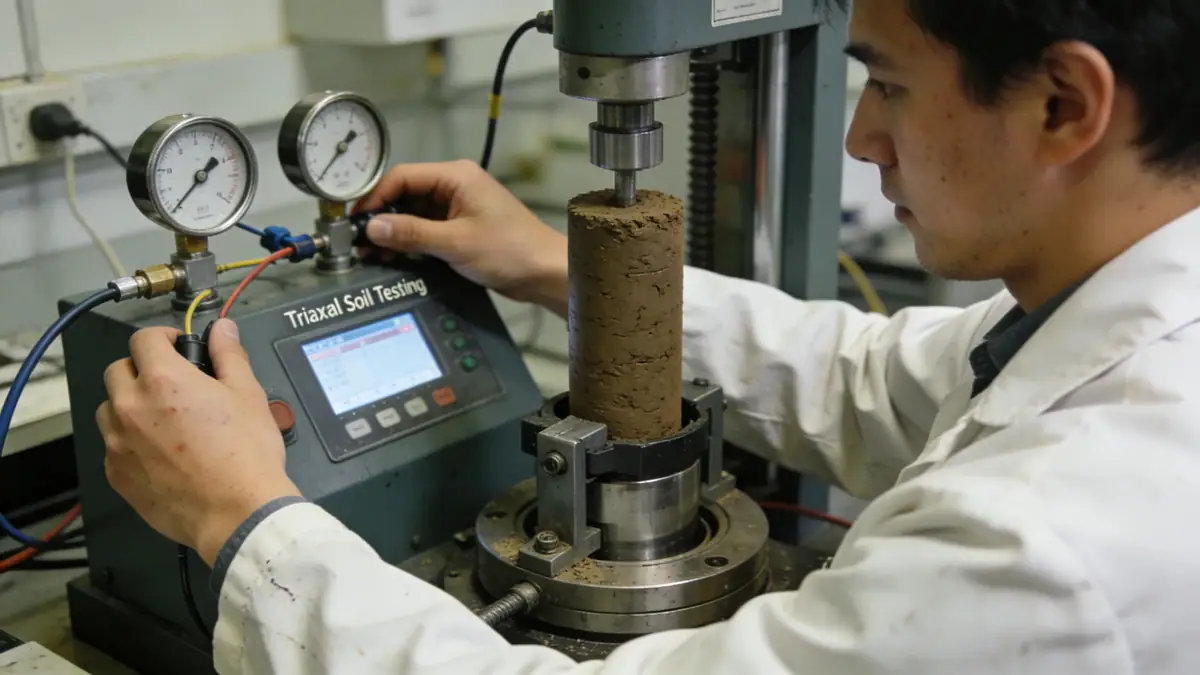
Our approach to geotechnical engineering in Pickering begins with a comprehensive site investigation program. We perform boreholes with standard penetration testing (SPT) following ASTM D1586, as well as cone penetration testing (CPT) for continuous soil profiling. Our spt boring services are tailored to the local stratigraphy, with sampling intervals typically every 1.0 to 1.5 meters. In the laboratory, we classify soils using grain size analysis (ASTM D6913) and Atterberg limits (ASTM D4318) to determine engineering properties. This data informs foundation design, slope stability analysis, and earthwork recommendations.
Reference Technical Parameters
| Parameter | Reference Value |
|---|---|
| Predominant soil type | Glacial till and clay/silt deposits |
| Maximum seismic acceleration (PGA) | 0.15–0.20 g (per NBCC 2020) |
| Typical groundwater level | 2–5 m below grade |
| Bedrock depth | Variable, typically 10–30 m |
| Typical N60 range | 10–40 blows per 0.3 m |
Local Considerations — Pickering
Pickering's geology is shaped by its position on the Iroquois Plain and proximity to the Oak Ridges Moraine. The southern lakefill areas contain soft, compressible clays sensitive to loading, requiring careful settlement analysis. In the north, glacial tills with cobbles and boulders complicate excavation. The water table is shallow near the lake, demanding dewatering measures for deep excavations. Seismic hazard is moderate, with a peak ground acceleration (PGA) of 0.15–0.20 g per NBCC 2020. Our team is well-versed in these conditions, and we coordinate with our geotechnical engineering en Toronto office to ensure consistent service across the region. Additionally, we offer slope stability assessments for sites on the moraine's slopes.
Request a Quote
Our team reviews your project and issues an initial report at no cost.
Or write us directly at [email protected]
Services in Pickering
Applicable Standards
- ASTM D1586 (Standard Penetration Test)
- National Building Code of Canada (NBCC) 2020
- Ontario Building Code (OBC) 2012
- ASTM D6913 (Particle Size Analysis)
- ASTM D4318 (Atterberg Limits)
Frequently Asked Questions
What are the typical soil conditions in Pickering?
Pickering has variable soils: soft clay and silt near Lake Ontario, and glacial tills with sand and gravel in the north. Groundwater is shallow near the lake, typically 2–5 m deep. Bedrock depth ranges from 10 to over 30 m.
Is seismic design required in Pickering?
Yes, per NBCC 2020, Pickering is in a moderate seismic zone with PGA of 0.15–0.20 g. Site-specific seismic hazard analysis may be needed for important structures. Our firm can evaluate liquefaction potential and recommend appropriate design spectra.
Are geotechnical studies mandatory for new construction in Pickering?
The Ontario Building Code requires a geotechnical report for most buildings, especially those with deep foundations or in areas with known challenging soils. Local municipalities may also require subsurface investigations for permit approval. We recommend consulting our team early in the design process.