
Methodology
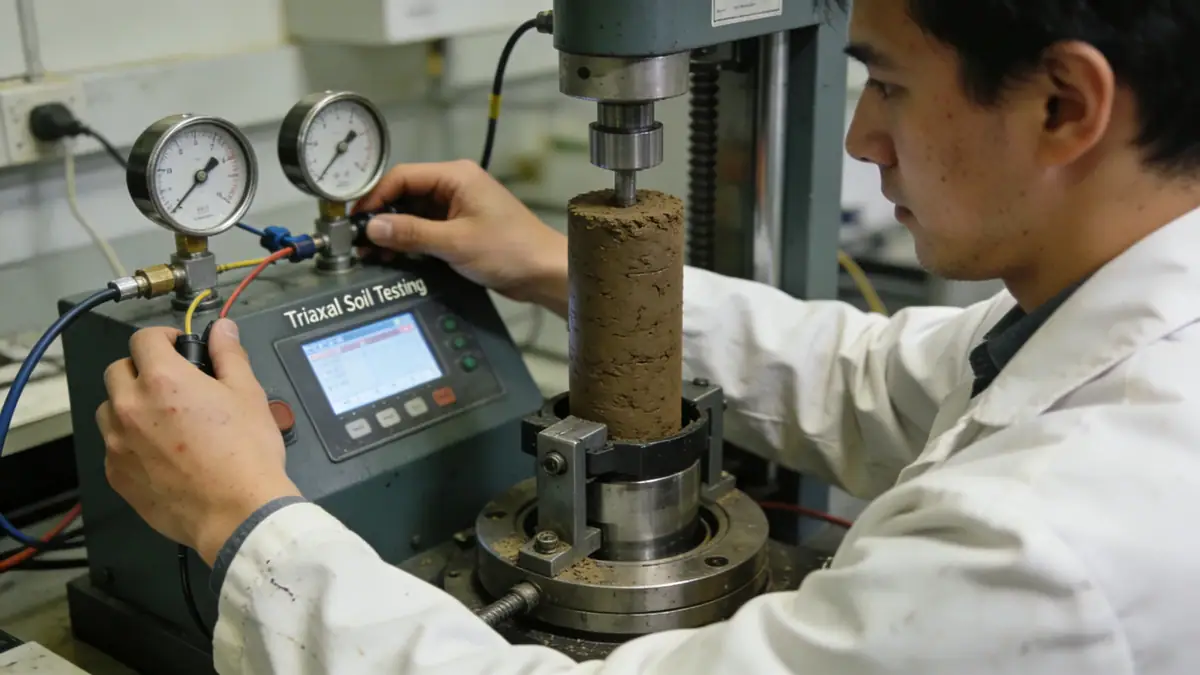
Our methodology for geotechnical engineering in St Catharines follows a systematic approach beginning with a thorough review of available geological maps and records. We then conduct field investigations using techniques such as spt boring to obtain disturbed and undisturbed soil samples at planned depths. In the laboratory, we perform classification tests (ASTM D2487), consolidation tests (ASTM D2435), and direct shear tests (ASTM D3080) to determine engineering properties. All work adheres to the Ontario Building Code and relevant ASTM standards. Our integrated process ensures that foundation designs are based on site-specific data, reducing uncertainty for owners and developers.
Reference Technical Parameters
| Parameter | Reference Value |
|---|---|
| Predominant soil type | Glacial till and lacustrine clay/silt |
| Maximum seismic acceleration (PGA) | 0.15 to 0.25 g (based on NBCC 2020) |
| Typical groundwater level | 1.5 to 4.0 m below grade |
| Bedrock depth | 10 to 30 m (Queenston Shale) |
| Typical N60 range (SPT) | 5 to 30 blows/ft (ASTM D1586) |
Local Considerations — St Catharines
Our geotechnical engineering work in St Catharines accounts for five key local factors: (1) Glacial till and lacustrine deposits dominate, with variable clay and silt layers requiring careful sampling. (2) Groundwater levels are typically shallow (1.5–4 m), affecting excavation and dewatering. (3) Seismic hazard is moderate (PGA up to 0.25 g per NBCC 2020), needing site-specific response analyses for critical structures. (4) Significant soil variability exists between older downtown areas and new subdivisions, demanding multiple boreholes. (5) Common issues include soft compressible clays in low-lying zones and expansive soils on slopes. Our team integrates these factors into every project. For broader regional context, we coordinate with our geotechnical engineering en Toronto office.
Request a Quote
Our team reviews your project and issues an initial report at no cost.
Or write us directly at [email protected]
Services in St Catharines
Applicable Standards
- ASTM D1586 (Standard Penetration Test)
- NBCC 2020 (National Building Code of Canada)
- Ontario Building Code (OBC) 2012
- ASTM D2487 (Unified Soil Classification System)
- ASTM D2435 (Consolidation Test)
Frequently Asked Questions
What types of soil are typical in St Catharines?
St Catharines predominantly features glacial till and lacustrine deposits, including clay, silt, sand, and gravel. The till is often dense, while lacustrine clays can be soft to firm. Understanding this variability is essential for foundation design.
Are geotechnical studies mandatory for new construction in St Catharines?
The Ontario Building Code requires a geotechnical report for most buildings, especially for foundations on compressible soils, in seismic zones, or where groundwater is shallow. Local municipalities may also request studies for permit approval.
How does seismic hazard affect geotechnical engineering in St Catharines?
St Catharines lies in a moderate seismic zone (PGA 0.15–0.25 g). Our firm evaluates site-specific seismic response, including liquefaction potential and soil amplification, to meet NBCC 2020 requirements and ensure structural safety.