Methodology
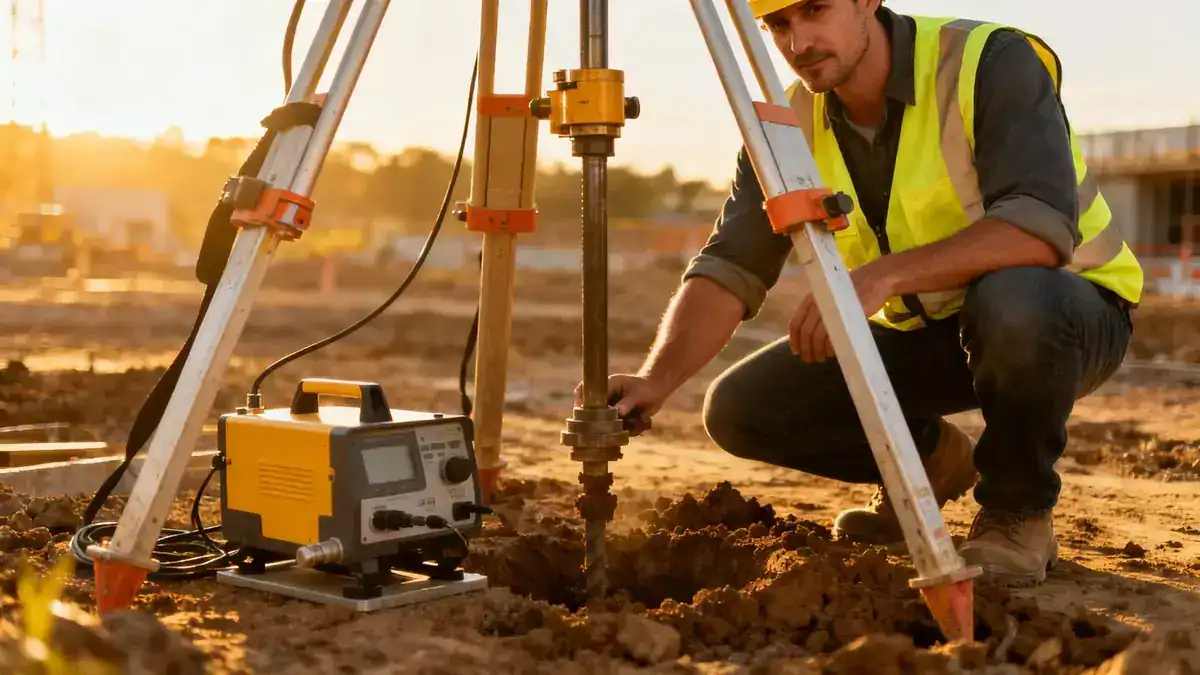
Our methodology for geotechnical engineering in Sudbury begins with a comprehensive review of existing geological maps and previous borehole records from the area. We then design a site-specific subsurface investigation program that typically includes spt boring to recover disturbed and undisturbed samples, as well as to perform standard penetration tests in accordance with ASTM D1586. In situ testing such as cone penetration tests (CPT) and geophysical surveys are employed where needed to characterize the variably weathered bedrock and dense glacial tills. All field data are integrated with laboratory testing to develop a robust geotechnical model for foundation design and earthworks.
Reference Technical Parameters
| Parameter | Reference Value |
|---|---|
| Predominant soil type | Glacial till, silty sand with gravel, and fractured bedrock |
| Maximum seismic acceleration (PGA) | 0.15g to 0.25g (based on NBCC 2020 seismic hazard maps) |
| Typical groundwater level | 2 to 6 m below ground surface, variable with season and topography |
| Bedrock depth | 1 to 15 m, with outcrops common in the Sudbury Basin |
| Typical N60 range (SPT) | 10 to 50 blows/300 mm in till; 50+ in weathered bedrock |
Local Considerations — Sudbury
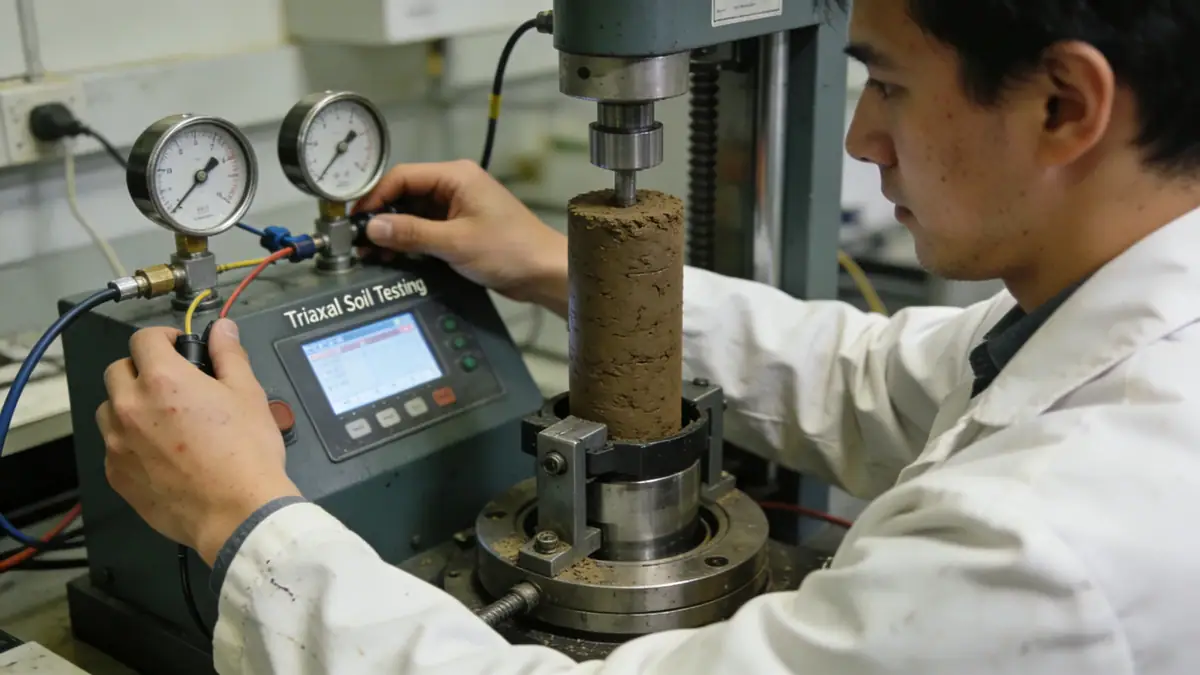
Sudbury's geological setting is dominated by the Sudbury Basin impact structure, resulting in a unique mix of glacial till, lacustrine clays, and fractured bedrock. The presence of shallow bedrock in many areas necessitates careful foundation assessments, often requiring rock socketed piles or controlled blasting. Groundwater levels can be high in low-lying zones, affecting excavation stability and dewatering designs. Local building codes reference the Ontario Building Code with seismic provisions from NBCC 2020. Our team is well-versed in these conditions, offering soil mechanics laboratory testing to evaluate till compaction and clay sensitivity. For projects in the Greater Sudbury area, we also coordinate with geotechnical engineering en Toronto to align with provincial standards.
Request a Quote
Our team reviews your project and issues an initial report at no cost.
Or write us directly at [email protected]
Services in Sudbury
Applicable Standards
- ASTM D1586
- NBCC 2020 (National Building Code of Canada)
- Ontario Building Code (OBC) 2012
- CSA A23.1 Concrete Materials and Methods
- ASTM D2487 Unified Soil Classification System
Frequently Asked Questions
What are the typical soil conditions encountered in Sudbury?
Sudbury's soils are predominantly glacial tills composed of silty sand and gravel, often with cobbles and boulders. Lacustrine clay deposits are found in low-lying areas, and the bedrock is generally fractured metasedimentary and igneous rock of the Sudbury Basin. Depth to bedrock varies widely from outcrops to over 15 meters.
Is a geotechnical study mandatory for construction in Sudbury?
Yes, the Ontario Building Code requires a geotechnical investigation for most building permits, especially for structures with foundations on variable or unknown soil conditions. Studies are also mandatory for excavations deeper than 1.2 meters and for projects involving significant earthworks or retaining walls.
What seismic design considerations apply to Sudbury?
Sudbury falls within Seismic Hazard Zone 0.15g to 0.25g peak ground acceleration per NBCC 2020. Site-specific response spectra may be required for important structures. The presence of soft clay or loose sand can amplify seismic waves, so liquefaction potential should be assessed for sites with high groundwater levels.