Methodology

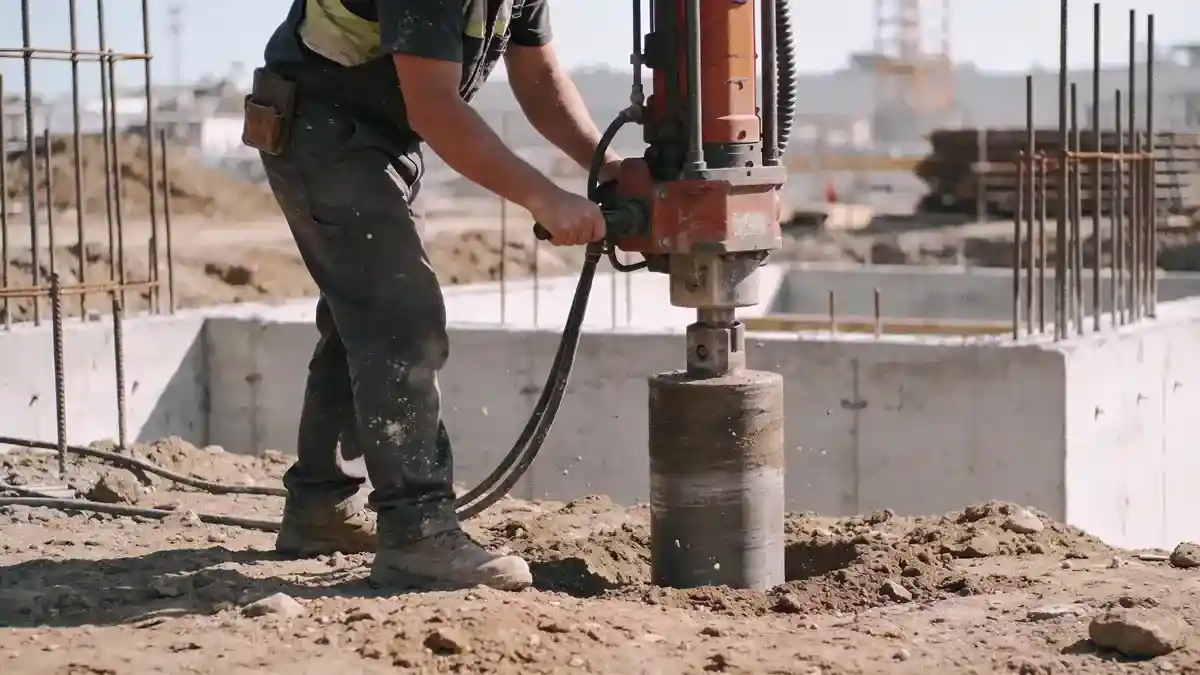
Our methodology for geotechnical engineering in Oakville integrates standard penetration testing (SPT) per ASTM D1586, with sampling intervals every 1.5 m to characterize soil strata. We perform continuous recording with cone penetration tests (CPT) at 2 cm intervals, reaching depths of 20–30 m for deep foundations. Laboratory testing includes grain size analysis (ASTM D6913), Atterberg limits, and direct shear tests (ASTM D3080) on undisturbed samples. For slope stability assessments, we utilize limit equilibrium methods and finite element modeling, incorporating groundwater monitoring and seismic loading per the Ontario Building Code. Our team ensures rigorous field supervision and data reporting for all projects.
Reference Technical Parameters
| Parameter | Reference Value |
|---|---|
| Predominant soil type | Glacial till (silty sand to sandy silt) with cobbles |
| Maximum seismic acceleration (PGA) | 0.15g (5% damped, 2% in 50 years) per OBC 2012 |
| Typical groundwater level | 2–5 m below grade, varies seasonally |
| Bedrock depth | 10–30 m (Queenston shale, Georgian Bay formation) |
| Typical N60 range | 15–40 blows/ft (glacial till), 5–15 blows/ft (fill/soft clay) |
Local Considerations — Oakville
Oakville's subsurface conditions are dominated by glacial tills overlying shale bedrock, with groundwater levels influenced by Lake Ontario and local drainage. Our team has extensive experience in the Bronte Creek and Sixteen Mile Creek valleys, where deeper fills and variable groundwater require careful dewatering and slope stability measures. For instance, recent work near the Kerr Street corridor involved soft clay layers over till, demanding advanced consolidation testing and wick drain design. We also address seismic site classification per OBC 2012, with typical Site Classes C and D, and coordinate with local municipalities for permitting. Our hub for regional operations is our geotechnical engineering team in Toronto, ensuring consistent quality across the Greater Toronto Area. For specialized investigations, we offer spt boring to characterize soil strength and stratigraphy.
Request a Quote
Our team reviews your project and issues an initial report at no cost.
Or write us directly at [email protected]
Services in Oakville
Applicable Standards
- ASTM D1586 (Standard Test Method for SPT)
- Ontario Building Code (OBC) 2012 Division B
- CSA A23.3 (Design of Concrete Structures)
- ASTM D2487 (Unified Soil Classification System)
Frequently Asked Questions
What are the typical soil types found in Oakville?
The dominant soil in Oakville is glacial till, consisting of silty sand to sandy silt with occasional cobbles. In low-lying areas near Lake Ontario and creek valleys, soft lacustrine clay and organic deposits may be encountered. Fill materials from past development are also common in the downtown core.
Is seismic design required for buildings in Oakville?
Yes, per the Ontario Building Code 2012, Oakville falls under Seismic Hazard Category 2 with a peak ground acceleration (PGA) of 0.15g. Site-specific seismic response analyses are required for post-disaster buildings and structures on soft soils (Site Class E or F). Our firm provides these assessments for compliance.
Are geotechnical studies mandatory for residential construction in Oakville?
For most single-family homes, a geotechnical study is not legally required unless the site has known hazards (e.g., steep slopes, fill, or high groundwater). However, for projects on ravines, near creeks, or with deep foundations, the Town of Oakville mandates a geotechnical report to ensure safety and stability.