Methodology
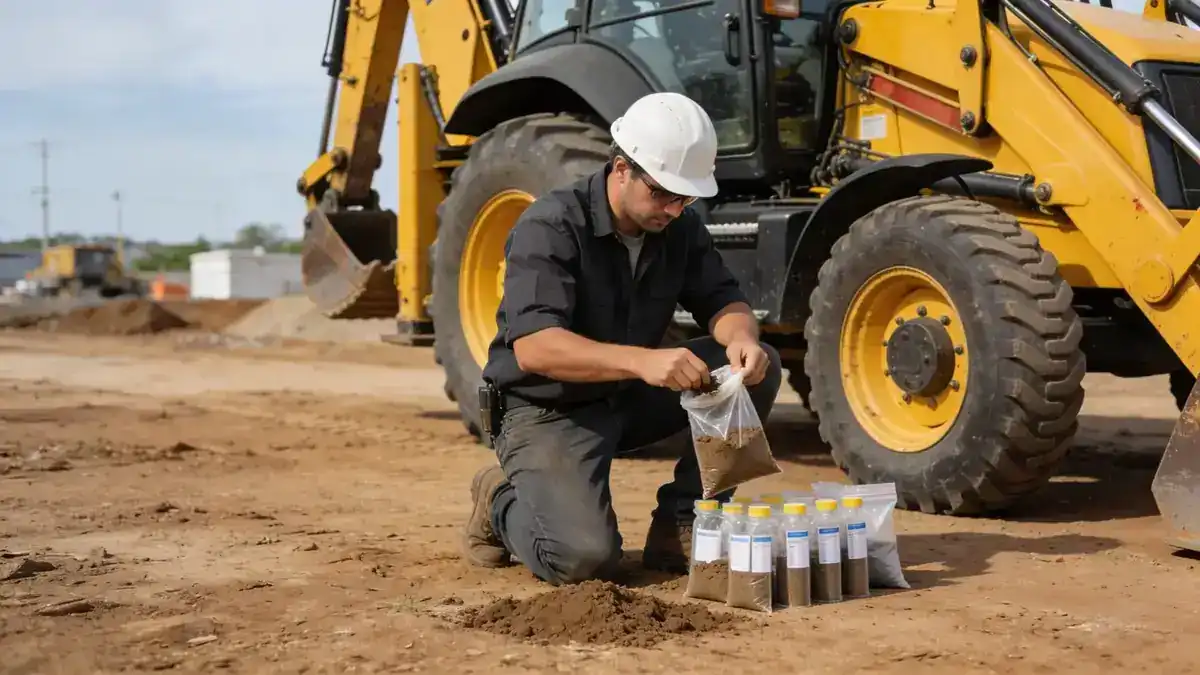
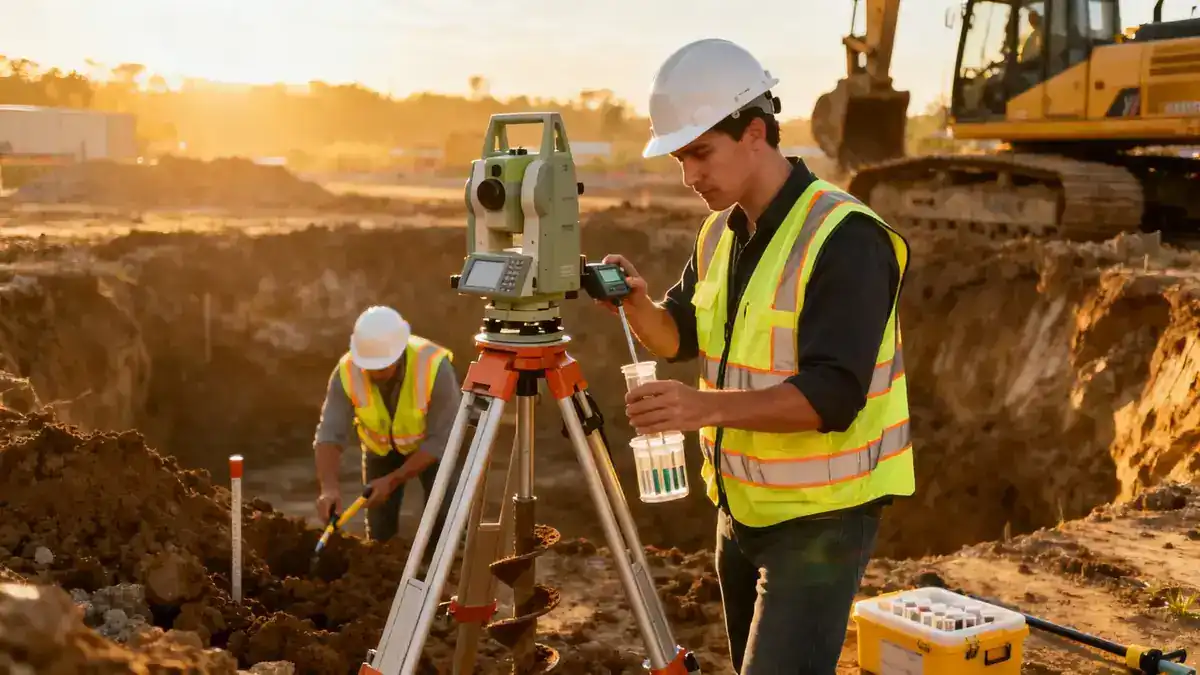
Our methodology for geotechnical engineering in Grande Prairie begins with a review of existing geological maps and nearby project records to characterize subsurface conditions. We then conduct field investigations including spt boring to obtain disturbed and undisturbed samples at regular intervals, typically every 1.5 meters per ASTM D1586. Soil samples are classified using visual-manual procedures and laboratory testing for moisture content, grain size distribution (ASTM D6913), and Atterberg limits (ASTM D4318). For seismic design, we evaluate the site class per ASCE 7 and the Alberta Building Code, incorporating peak ground acceleration values of 0.10g to 0.15g for Grande Prairie. Our integrated approach ensures reliable foundation recommendations tailored to local conditions.
Reference Technical Parameters
| Parameter | Reference Value |
|---|---|
| Predominant soil type | Glacial till with sand and gravel lenses |
| Maximum seismic acceleration (PGA) | 0.10g to 0.15g (Alberta Building Code Site Class C/D) |
| Typical groundwater level | 3–6 m below ground surface |
| Bedrock depth | Variable, often >20 m (sedimentary bedrock) |
| Typical N60 range | 10–30 blows/300 mm (glacial till) |
Local Considerations — Grande Prairie
Grande Prairie's glacial till exhibits variable density and occasional soft zones due to localized clay lenses, requiring careful SPT sampling every 1.5 m per ASTM D1586. The water table at 3–6 m depth can impact excavations and foundation design, particularly in low-lying areas near Bear Creek. Seismic site classification per the Alberta Building Code often falls under Class C or D, with PGA values up to 0.15g. Older neighborhoods may have undocumented fill or organic soils, necessitating deeper investigations. Common projects include residential subdivisions and commercial developments, where our team provides recommendations for shallow foundations or deep foundations as needed. For broader regional context, our geotechnical engineering en Edmonton team collaborates on complex projects across Alberta.
Request a Quote
Our team reviews your project and issues an initial report at no cost.
Or write us directly at [email protected]
Services in Grande Prairie
Applicable Standards
- ASTM D1586 (Standard Test Method for SPT)
- ASTM D6913 (Particle-Size Distribution)
- ASTM D4318 (Atterberg Limits)
- Alberta Building Code 2019 (Division B, Part 4)
- ASCE 7 (Minimum Design Loads for Buildings)
Frequently Asked Questions
What are the predominant soil types in Grande Prairie?
Grande Prairie is primarily underlain by glacial till, a heterogeneous mixture of clay, silt, sand, and gravel. Occasional lenses of soft clay or silt may be encountered, particularly near the Peace River valley. These conditions require careful subsurface investigation for foundation design.
Is Grande Prairie located in a seismic zone?
Yes, Grande Prairie falls within a moderate seismic hazard zone according to the Alberta Building Code. The peak ground acceleration (PGA) ranges from 0.10g to 0.15g for a 2% probability of exceedance in 50 years. Site-specific seismic analysis is recommended for critical structures.
Are geotechnical studies mandatory for construction in Grande Prairie?
While not always mandatory for small residential projects, geotechnical studies are strongly recommended and often required for commercial, industrial, or multi-story buildings. Local building officials may request a geotechnical report to ensure compliance with the Alberta Building Code, especially for sites with variable soil conditions.