
Methodology
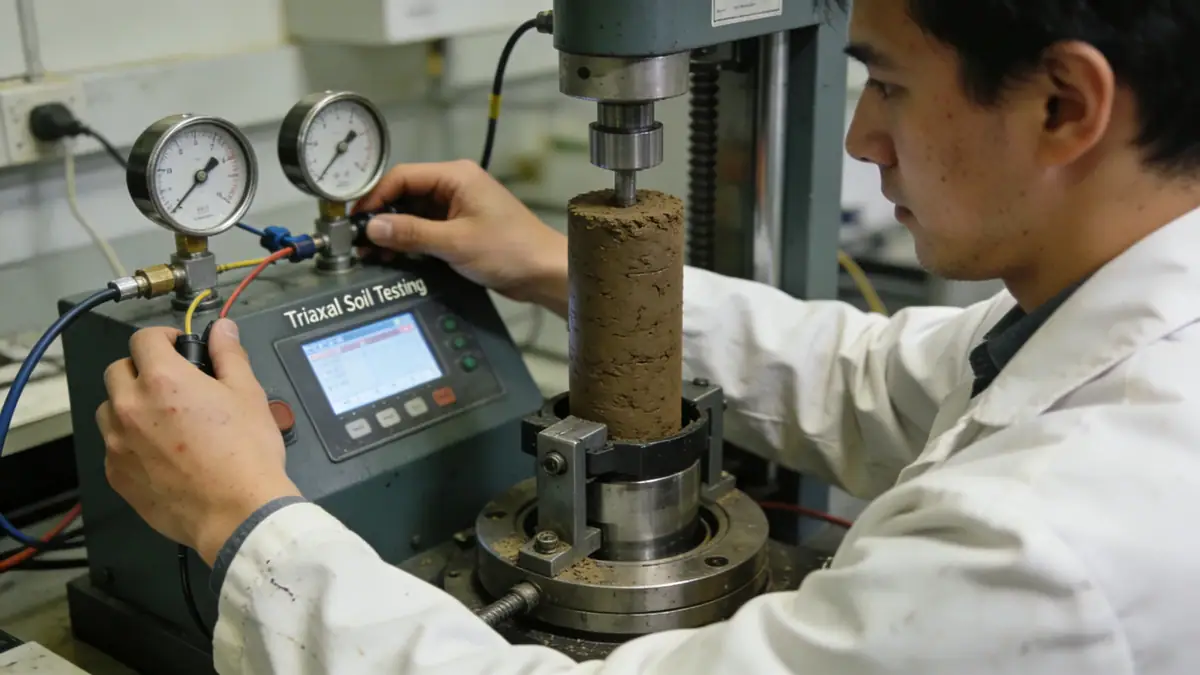
Our methodology for geotechnical engineering in Brandon Manitoba begins with a detailed review of existing geological maps and borehole records to plan subsurface investigations. We typically conduct spt boring at depths of 8 to 15 meters for residential projects, and up to 30 meters for commercial structures, with sampling intervals of 1.0–1.5 meters per ASTM D1586. This is complemented by soil mechanics laboratory testing on representative samples to determine index properties, shear strength, and consolidation characteristics. The integration of field and lab data allows us to develop site-specific geotechnical models that address the unique challenges of Brandon’s expansive clays and shallow water table.
Reference Technical Parameters
| Parameter | Reference Value |
|---|---|
| Predominant Soil Type | Glacial till and lacustrine clay |
| Maximum Seismic Acceleration (PGA) | 0.08–0.15 g (ASCE 7 Seismic Site Class D) |
| Typical Groundwater Level | 1.5–3.0 m below ground surface |
| Bedrock Depth | 10–20 m (shale or limestone) |
| Typical N60 Range | 4–15 blows/0.3 m (clay); 10–30 blows/0.3 m (till) |
Local Considerations — Brandon Manitoba
Brandon’s subsurface is dominated by expansive clay soils from glacial Lake Agassiz, posing risks of differential settlement and foundation heave. Shallow groundwater tables (1.5–3.0 m) often require dewatering during excavation. Seismic hazard is low to moderate (PGA 0.08–0.15 g per ASCE 7), but site-specific response analyses are recommended for critical structures. Older neighborhoods may have undocumented fill, while new developments on the outskirts encounter stiffer glacial till at depth. Our soil mechanics laboratory tests help quantify swelling potential and consolidation behavior, ensuring designs account for these local conditions. For broader context, our team coordinates with geotechnical engineering in Winnipeg to align regional practice.
Request a Quote
Our team reviews your project and issues an initial report at no cost.
Or write us directly at [email protected]
Services in Brandon Manitoba
Applicable Standards
- ASTM D1586 (Standard Penetration Test)
- ASCE 7 (Minimum Design Loads for Buildings)
- Canadian Foundation Engineering Manual (CFEM)
- National Building Code of Canada (NBCC) 2020
Frequently Asked Questions
What soil types are common in Brandon Manitoba for geotechnical engineering?
Brandon’s soils primarily consist of lacustrine clay and glacial till. The clay is highly plastic and expansive, while the till is dense and provides better bearing capacity. Ground conditions vary significantly across the city, requiring site-specific investigations.
What seismic design considerations apply in Brandon Manitoba?
Brandon falls under NBCC 2020 seismic hazard category with a PGA of about 0.08–0.15 g. Site classification per ASCE 7 is typically D (stiff soil). For essential structures, site-specific response spectra are recommended to capture local soil amplification effects.
Are geotechnical investigations mandatory for construction in Brandon Manitoba?
While not always legally required, most building permits for commercial or multi-story residential projects necessitate a geotechnical report. Lenders and insurers often mandate subsurface studies to mitigate risks of settlement, slope failure, or expansive soil damage.